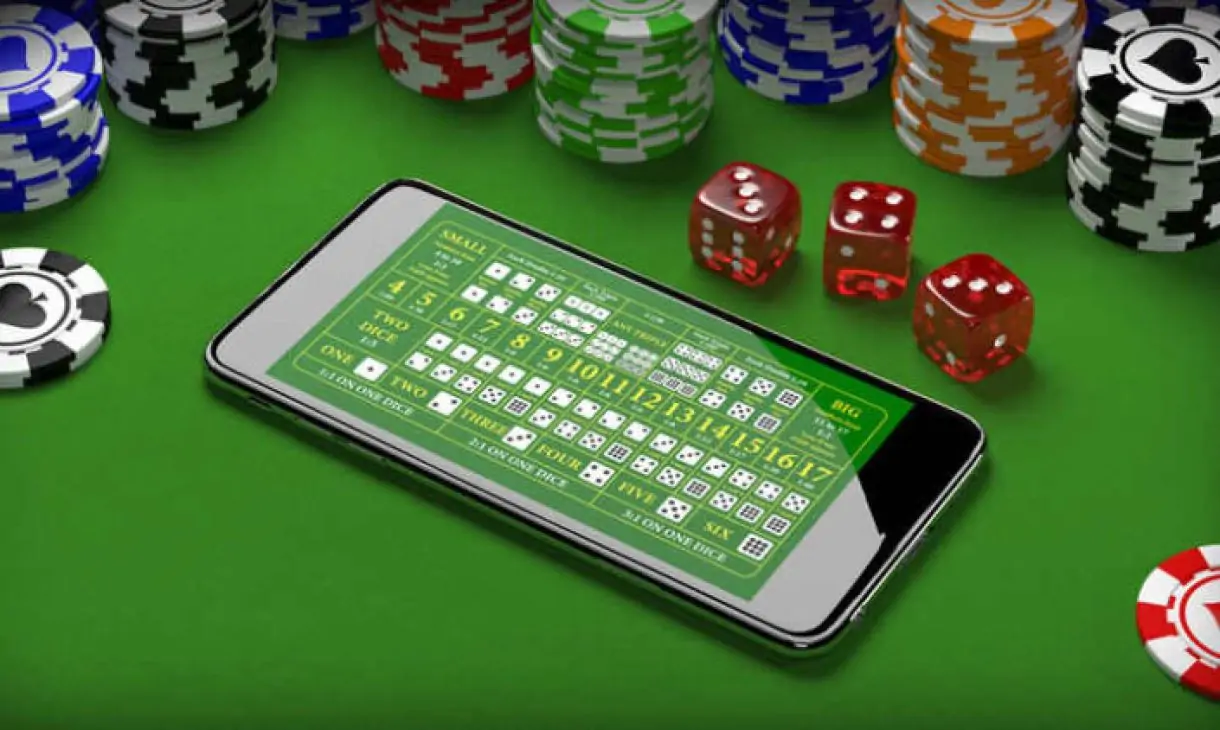
Gambling has always reflected the spirit of its era. While in ancient China, the roll of the dice determined the outcome of fate, in the 21st century, it increasingly takes place within an app. This is how the digital evolution of one of the most recognizable Asian table games began — Sic Bo, whose name translates as “precious dice,” has its roots in Chinese history. Over the centuries, it has retained its essence — betting on combinations of three dice — but has changed its environment: from street gambling spots to luxurious halls in Macau, and today to mobile Sic Bo apps on smartphones around the world.
|
Stage |
Format |
Technology and features - Advertisement - Continue Reading Below - - Advertisement - Continue Reading Below - |
|
Classic casino |
Board game |
Physical dice, dealer presence, hall atmosphere - Advertisement - Continue Reading Below - - Advertisement - Continue Reading Below - |
|
Online version |
Web interface |
Flash/HTML5, basic UX, auto-animation of the roll |
|
Mobile applications |
Mobile Sic Bo apps |
Touch control, screen adaptation, push notifications |
|
Live casino |
Streaming video, real dice |
Multi-cam streaming, real-time betting, live dealers |
|
AR/VR formats |
Immersive reality |
3D interfaces, tactile dice simulation, metaverses |
Before Sic Bo became popular on smartphone screens, it dominated physical casinos in Macau, the Asian gambling capital. Here, the game was associated with the noise of the hall, the rustling of chips, and the mysterious swaying of a transparent bowl with three dice. It was in Macau that the canonical version of Sic Bo was formed — with a unique table design, croupiers, and a special betting board.
The physical version of the game had an important element that is difficult to reproduce digitally: tactile dice simulation — the tactile experience of interacting with the dice, visual aesthetics, and an atmosphere of anticipation. Players watched the real throws, followed the croupier's movements, and relied on intuition and superstition. This created a special, almost ritualistic involvement in the game.
However, this format also had its limitations:
Sic Bo in a real casino is only available in certain rooms and at strictly designated times.
It was sometimes difficult for beginners to understand the complex betting table, especially with the fast pace of the game and the pressure of the surrounding atmosphere. This hindered the expansion of the audience, especially among young players accustomed to UX-oriented solutions.
To play, you need to be physically present in a gambling establishment.
Sic Bo is still popular in Macau, especially among tourists from East Asia, but since the early 2010s, it has become clear that for the game to survive in the smartphone era, it needs to adapt. The demand for gambling evolution — the technological development of gambling — grew along with mobile traffic. And Sic Bo was one of the first Asian games to go down this path.
The transition of Sic Bo to online gaming began long before the era of mobile apps. The first versions of the game appeared on browser-based gambling platforms in the early 2000s, at a time when Flash games were considered the technological standard and stable Internet access was considered a luxury.
These adaptations of Sic Bo were far from ideal. Visually, they resembled arcade games with minimal animation, and the mechanics of the game boiled down to simply pressing the “roll” button. The user interface design left much to be desired: the elements were static, the buttons were inconvenient, and the lack of realistic sounds or animations deprived the game of its dynamics.
Nevertheless, it was an important step. It made Sic Bo accessible outside of casinos — now not only visitors to Macau could play, but also users from:
European countries;
the US;
Southeast Asia.
The format proved particularly attractive to expats and lovers of Eastern culture interested in Asian-themed online games.
During these years, the first attempts to imitate the atmosphere of a real casino also began. Virtual dice animations appeared — simple but noticeable visual effects that gave the dice at least some realism. Some platforms even implemented pseudo-random algorithms with roll visualization to preserve the spirit of unpredictability, which is so important in the original game.
However, the key factor for success was not graphics, but accessibility. Browser-based Sic Bo games worked on most PCs and even some Flash-enabled smartphones. This allowed players to practice, learn the rules, and experiment with strategies without the pressure of a real casino and betting.
Browser versions also became the first tests for the implementation of multilingual support and in-game betting tutorials, which opened the game up to new markets and beginners. These developments later formed the basis for the interfaces of mobile applications and live versions of Sic Bo.
With the disappearance of Flash and the transition to HTML5, this stage of development is now a thing of the past, but it was this stage that became the bridge between physical casinos and future mobile applications. The game began to change, adapting to the rhythm of a new generation of players — with an emphasis on speed, accessibility, and interactivity.
The main advantage of the mobile format is touch-based interaction — controlling the game with your fingers. This has made it possible to create intuitive betting interfaces where players can quickly select odds, change the type of bet, repeat a move, or watch the dice roll animation by simply swiping the screen. An example of this is the popular solution in mobile Sic Bo apps, where the interface is built on the principle of a single-page UX, without being overloaded with buttons.
The second important feature is adaptive design. Responsive UI design has made it possible to play Sic Bo on screens of any size, from iPhones to tablets. In addition, modern applications include PUSH notifications, real-time odds updates, and gesture-based commands — for example, to roll the dice, you just need to shake your phone.
Unlike desktop versions, mobile solutions now offer a personalized gaming experience, including bet history, favorite game modes, night mode, and even an AI assistant that suggests betting options based on the user's strategy.
The emergence of live casino experiences was another major step in the evolution of Sic Bo. At the intersection of streaming video and gambling technologies, a hybrid format emerged in which a physical dealer rolls real dice in front of a camera, and players from around the world place bets in real time.
This format was a response to the demand from an audience that wanted to preserve the atmosphere of a real casino without leaving home. It proved to be particularly popular in Asia, where Macau-style Sic Bo is considered a classic. Many providers began to build studios styled after the interiors of Eastern casinos — with red and gold accents, satin dealer uniforms, and traditional Chinese symbols.
Visually and technically, Live Sic Bo tables use several streams:
a general view;
a close-up view of the dice;
a dynamic betting panel.
Players can watch the croupier's actions, see him lift the dome with the dice, and make decisions in literally seconds — the interface supports real-time betting input.
A significant innovation was the introduction of PUSH notifications. Now users receive notifications about the start of new rounds, changes in odds, bonuses, and special events. This helps to keep players engaged and increases the frequency of participation in sessions.
At the same time, multi-device live casinos are also developing — systems that allow you to start playing on your phone, continue on your tablet, and then return to your laptop. This makes Sic Bo even more flexible and accessible.
Sic Bo has gone from a table game in Macau casinos to a fully digital experience in apps and live tables. However, its transformation does not end there. The next step will be the integration of immersive technologies, such as augmented reality and virtual reality, which have the potential to redefine the concept of online gambling.
Already today, some gaming studios are experimenting with VR casino environments, where players can literally “sit” at a virtual table, see the avatars of other participants, and interact with elements of the environment. In this format, VR Sic Bo becomes not just a game, but a social environment. Players can share their emotions, cheer each other on, and comment on the outcome of the dice roll in real time.
On the other hand, AR interfaces allow the gaming table to be projected onto any flat surface, such as a table in the living room. Such applications are actively being developed for mixed reality devices such as Apple Vision Pro or Meta Quest 3. As a result, the player gets a physical sense of presence without leaving the real space.
Thus, Sic Bo is not just adapting to technology. It becomes part of them. With the transition to next-gen gambling interfaces, this ancient game is getting a chance at a second life. However, it is no longer in casino halls, but in digital metaverses, where the boundaries between the player, the game, and the space are blurred.
Thus, Sic Bo has not simply made the transition from a traditional gambling game in Chinese casinos to modern applications. It demonstrates how the entertainment industry is adapting to digital realities. From classic tables in Macau to live formats with push notifications, from mobile interfaces to the prospects of VR casinos, each stage reflects not only technological innovation but also the evolution of the user experience.
Sic Bo has proven to be flexible and versatile. It appeals to players both in live studios with real dealers and in mobile apps on smartphone screens. What's more, the game is becoming a testing ground for the latest technologies, from immersive UX to personalized AI scenarios.

- Advertisement - Continue Reading Below -
- Advertisement - Continue Reading Below -