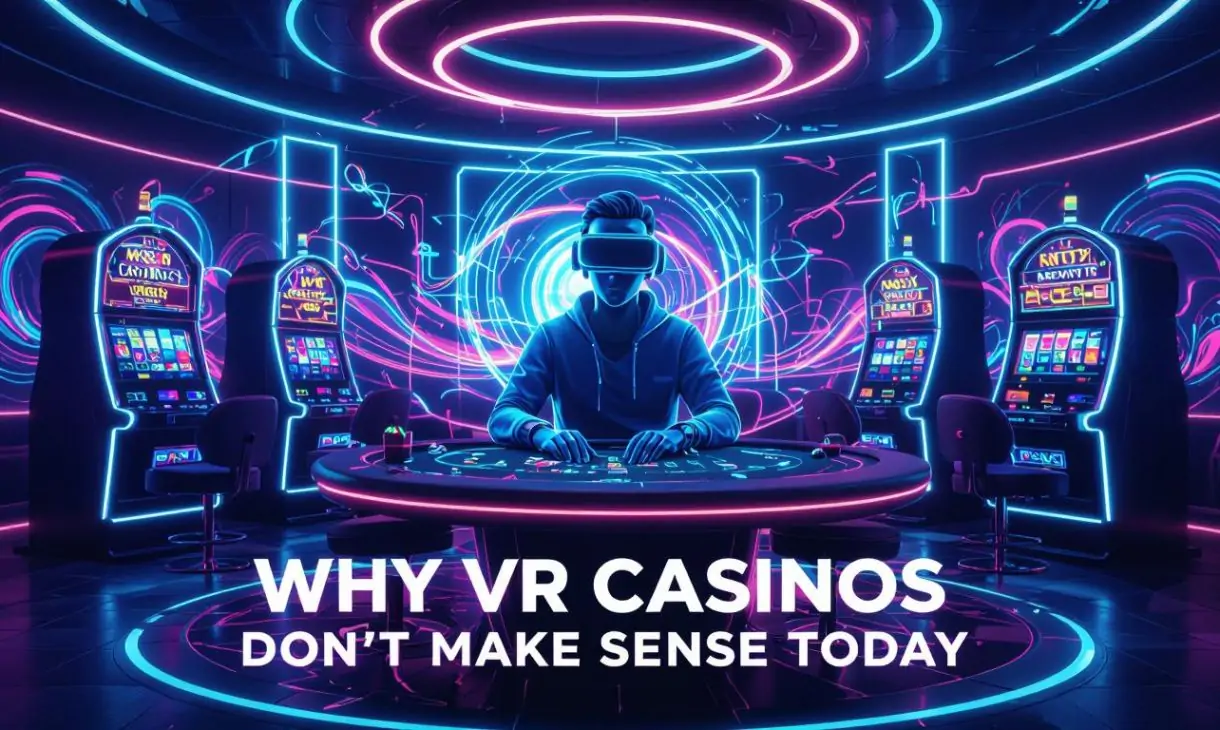
Virtual reality has always been one of those shiny promises that gets people excited. The idea of walking into a digital lobby, hearing the clink of chips, maybe even bumping into an avatar in a tux - it sounds slick, like something out of a movie. But when you look at how people actually play online in 2025, VR just doesn’t fit the rhythm. It’s cool in theory, sure, but right now it feels more like a sideshow than the future.
Most players aren’t looking for a two-hour immersive trip into a headset. They want something quick, like a quick game during lunch or while commuting. That’s why simple crash-style formats are thriving. They’re built for mobile, with fast rounds and low effort to jump in. Strapping on a headset and clearing space in your living room? That’s the exact opposite of what today’s audience is after.
Here’s another wrinkle: a lot of online players never set foot in a real-life venue. They’re not chasing the neon lights or velvet carpets of Vegas. They don’t want “authentic atmosphere” - they want straightforward, smooth gameplay they can understand in seconds. That so-called “experience” isn’t much of a selling point if you’ve never had it in the first place.
VR headset sales are growing, yes, but they’re still tiny compared to mobile adoption. Global numbers show only a sliver of people own one, and most of those are gamers testing the latest Meta or Apple headsets. Meanwhile, nearly half the world plays games on a phone. That’s a massive gap. Developers chasing VR today are essentially building for a niche audience, while the mainstream keeps reaching for what’s already in their pocket.
And when you think about markets like the Middle East - where mobile-first play dominates - the mismatch is even clearer. Platforms that work seamlessly on any device, like a legal yyy casino in UAE, are a better bet than pouring resources into VR projects no one’s equipped to use.
Take Aviator as an example. It’s one of the simplest crash games out there: a rising line, a tension curve, and a single decision point. That’s it. It blew up because it’s easy to learn, easy to play, and fits perfectly into short daily routines. Imagine layering VR on top of that - suddenly the magic is gone. The charm comes from how quick and frictionless it is.
Instead of chasing headsets, the smarter play is doubling down on what’s already working - mobile-first, design, social energy, and transparency.
Thumb-friendly controls, vertical layouts, and a no-clutter interface are the bare minimum today. Plus, don’t forget the social aspect: chat windows, visible wins, and a sense of community. Add this to a provably fair system where they can verify the results, and you have a winner. These elements match how people actually live and play in 2025. They’re not science fiction - they’re what’s working right now.
VR might have its big moment down the line. Maybe when the headsets don’t feel like wearing a toaster on your face and the price tag doesn’t sting as much. At that point, sure, people might actually want to hang out in virtual lobbies for hours.
But right now? That’s not the vibe. What folks actually stick around for is stuff that’s clear, quick, and easy to fire up anywhere. A mobile game you can play on the go beats one that needs goggles and free floor space. Yes, VR may be the future. But the future most players actually want right now is already here: short, mobile-friendly gameplay, and social features that feel real. Sometimes the smartest move isn’t chasing the shiny new thing - it’s doubling down on what’s already working.

- Advertisement - Continue Reading Below -
- Advertisement - Continue Reading Below -