


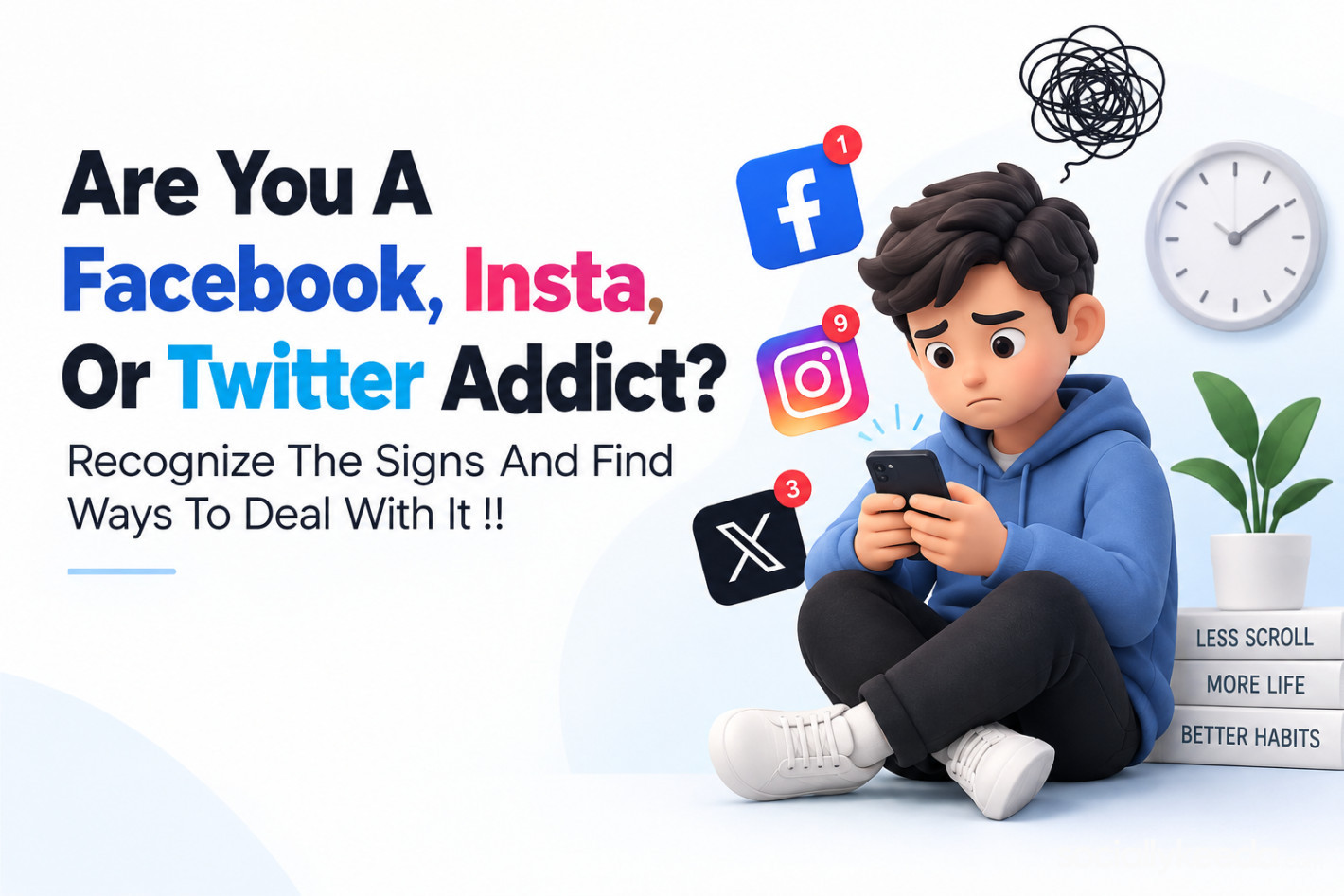
Social media, including Facebook, Instagram, and Twitter to name a few, is taking over the world, and that's not an exaggeration! Everyone - from eager-to-fit-in teenagers to educated businessmen and working professionals, to our intrigued grandparents - has joined the phenomenon. Unsurprisingly many have also been caught by the Facebook or Instagram Fever. So the question is, are we getting over-indulged? And, is there a thing called as 'Facebook Addiction Disorder' (FAD) or 'Twitter Addiction Disorder' (TAD)?
Find out the signs and symptoms of FAD /TAD and also discover some effortless to incorporate lifestyle modification to get rid of this disorder naturally.
Are you an addict? Recognize the signs
Do you find yourself checking Facebook on your phone during meetings, on the bus, on dates, during movies. Even in bed before you're asleep or no sooner you're awake? And you spend an inordinate amount of time on Facebook, allowing hours to splurge away unnoticed, the chores to go uncompleted, to an extent that you ignore family and friends in the actual world! If so, then you're surely a victim of Facebook Addiction Disorder.
You can also be an addict if you observe any or all of the below symptoms:
- Feel elated when using social media like Facebook/Instagram/Twitter
- Feel anger and disappointment when logging off of your social media apps
- Lose sleep since of checking your social media page
- Cancel appointments since you might miss something on your social networks
- Neglect bathing, eating. Other necessary activities to view 'updates'
- Check your 'virtual profile' every hour or even more frequently
- Prefer to converse with people online than in person
- Become enraged or stressed-out when a friend request is ignored or rejected
Valuable tips to combat this addiction disorder
Studies from all across the world, including one from the American Psychiatric Association (APA), show that physiological changes related to Facebook/Twitter addiction may be similar to smoking and drug addiction. And this is labeled as an impulse-control addiction. Cognitive behavioral therapy is effective for treating such impulse disorders. Your doctor can champion you better with different therapies and make you learn behavior-modifying techniques.
In the meanwhile, you can also follow some of the below-given methods to combat this addiction disorder:
- Admit that you're an addict, as admitting itself qualifies as a cliche to recognize a problem and to solve it.
- Try keeping a track of the time you spend on social networking sites to beat the addiction.
- Set a predetermined amount of time allowed for networking websites per day. Sixty minutes per day is more than enough time to catch up with others, read your news feeds, and make few posts.
- Limit the number of automatic feeds and status updates you get.
- Make one day per week as a 'Social Media Free' day.
- Try getting back to your hobbies, interests, sports, or other activities that you lost interest in because of social networking and the Internet.
- Set a goal of updating your status to once per week.
- Slowly, try to turn an entire weekend Social Media-free, to develop healthier and qualitative habits.






Comments
No comments yet — be the first to share your thoughts.