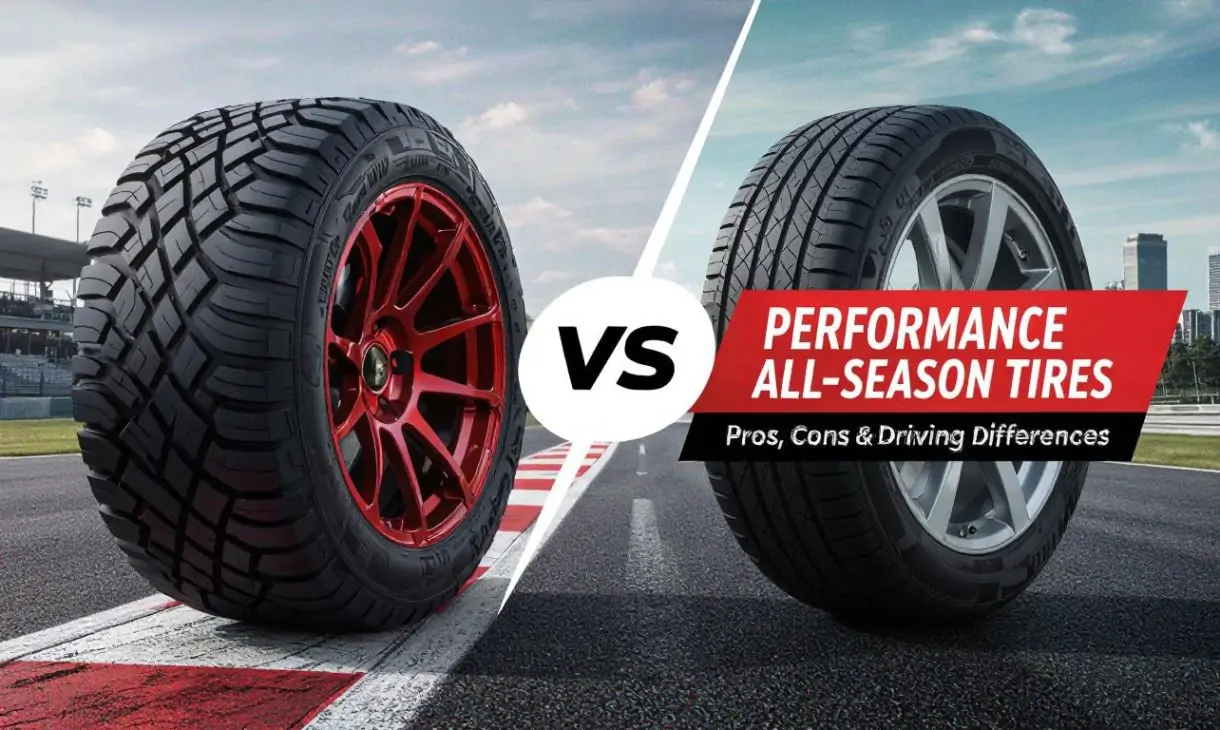
Car buyers often face the question: Should I choose performance tires or all-season tires? The answer depends on your driving style, climate, and priorities. Performance tires maximize handling, grip, and speed response, while all-season tires offer year-round convenience and durability. This guide breaks down the pros, cons, and real-world driving differences so you can make the best decision for your needs.

Performance tires are designed for sharper handling, precise steering, and maximum traction. They use specialized rubber compounds and aggressive tread designs to optimize grip on dry and wet roads.
Key Features:
Softer rubber for better traction.
Wider tread for stability at higher speeds.
Higher speed ratings (up to Y-rated for 186+ mph).
Stiffer sidewalls for cornering precision.
Quick Answer: Performance tires are built for drivers who value responsiveness, grip, and high-speed safety.
What Are All-Season Tires?
All-season tires are engineered for versatility. They combine moderate performance with usability across a range of weather conditions—dry, wet, and light snow.
Key Features:
Harder compounds for long tread life.
Moderate tread patterns for year-round grip.
Designed for comfort and fuel efficiency.
Typically lower speed ratings compared to performance tires.
Quick Answer: All-season tires are built for convenience and longevity, making them ideal for everyday drivers in moderate climates.
Pros and Cons of Performance Tires
Advantages
Superior cornering and handling at high speeds.
Shorter braking distances on dry pavement.
Enhanced steering response and agility.
Sporty feel that appeals to driving enthusiasts.
Often chosen by those who enjoy spirited driving or want enhanced safety in dry conditions.
Disadvantages
Shorter tread life due to softer compounds.
Reduced performance in cold or snowy weather.
Generally higher cost than standard tires.
Can produce more road noise.
Require more frequent replacement if driven aggressively.
Pros and Cons of All-Season Tires
Advantages
Versatility across dry, wet, and light snowy conditions.
Longer tread life compared to performance tires.
Better fuel efficiency thanks to low rolling resistance.
More affordable and widely available.
Balanced comfort and quiet ride for daily commuting.
Disadvantages
Less precise handling compared to performance tires.
Longer braking distances on dry roads.
Not ideal for extreme climates or spirited driving.
Can struggle in heavy snow or icy conditions.
Moderate responsiveness compared to specialized tires.
Driving Differences: Performance vs All-Season
Handling and Cornering
Performance Tires: Deliver sharper handling, stable cornering, and improved control during aggressive driving.
All-Season Tires: Provide predictable but less responsive handling, focusing more on comfort than precision.
Wet Weather Performance
Performance Tires: Excellent hydroplaning resistance and braking on wet pavement, especially at higher speeds.
All-Season Tires: Balanced performance in rain but less capable in extreme wet conditions.
Cold and Snow Conditions
Performance Tires: Not recommended—rubber hardens in low temperatures and traction suffers.
All-Season Tires: Manage light snow and cold weather but cannot match dedicated winter tires.
Longevity and Cost
Performance Tires: Shorter lifespan, typically 30,000–40,000 miles.
All-Season Tires: Longer lifespan, often 50,000–70,000 miles, saving buyers money long-term.
Driving Feel
Performance Tires: Deliver a connected, sporty driving feel, ideal for enthusiasts.
All-Season Tires: Prioritize comfort, smoother ride, and reduced cabin noise.
Who Should Choose Performance Tires?
Performance tires are ideal for:
Drivers who prioritize handling and agility.
Owners of vehicles designed for higher-speed stability.
Those living in warmer climates with little or no snow.
Enthusiasts who enjoy spirited highway or weekend driving.
Buyers seeking shorter braking distances for added safety in dry conditions.
Who Should Choose All-Season Tires?
All-season tires are best suited for:
Daily commuters seeking year-round convenience.
Drivers in regions with mild winters.
Buyers who prioritize tread life and fuel economy.
Families or casual drivers focused on comfort and value.
Those who want one set of tires without seasonal changes.
Do performance tires wear out faster?
Yes. Their softer compounds trade longevity for grip, typically lasting fewer miles than all-season tires.
Can all-season tires handle snow?
Yes, but only light snow. For heavy snow and ice, dedicated winter tires are recommended.
Are performance tires worth the cost?
If you value handling, safety at high speeds, and driving precision, performance tires are worth the investment.
Do performance tires improve fuel economy?
Not usually. They prioritize grip and speed response over efficiency, while all-season tires are better for fuel savings.
Can I mix performance and all-season tires?
It’s not recommended. Mixing tire types can lead to uneven handling, unpredictable braking, and reduced safety.

Real-World Scenarios
City Commuters: Likely better with all-season tires for comfort and longer life.
Weekend Enthusiasts: Performance tires maximize fun and responsiveness.
Highway Drivers: All-season tires save fuel and last longer over many miles.
Hot Climate Drivers: Performance tires shine in warm, dry conditions.
Mild Winter Regions: All-seasons provide the balance needed without swapping tires.
Additional Knowledge: Tire Ratings and Symbols
When deciding between performance and all-season tires, check:
UTQG Ratings: Treadwear, traction, and temperature ratings for a clearer idea of longevity and safety.
Speed Ratings: Ranging from S (112 mph) to Y (186+ mph), which determines how much speed the tire can safely handle.
Load Index: Ensures the tire can support the weight of your vehicle.
Tread Patterns: Symmetrical for smooth rides, asymmetrical for versatile performance, and directional for enhanced wet traction.
Choosing between performance and all-season tires depends on your priorities. Performance tires deliver unmatched grip, handling, and sporty driving feel but require trade-offs in cost and longevity. All-season tires provide year-round versatility, longer tread life, and affordability, making them the practical choice for most drivers.
Bottom line: If driving thrills and precision matter most, choose performance tires. If convenience, comfort, and value matter more, go with all-season tires.
Next step: Review your climate, driving habits, and budget before making your tire investment. With the right choice, you’ll enhance both your driving experience and safety.

- Advertisement - Continue Reading Below -
- Advertisement - Continue Reading Below -