
Want to find money that is already sitting inside your business?
Stop staring at sales for a minute and look at how you buy.
Entrepreneurs spend most of their waking hours chasing sales. More guests. More transactions. Too rarely do they focus on the buying side of the equation. And it's here where one simple change can increase profit on every ticket sold.
And that decision is usually about buying in bulk.
Volume buying doesn't simply nick a few cents off the unit price. It shifts the whole cost curve of the business. Ordering, delivery, labour, waste, cashflow all shift in tandem.
Here's what's covered:
-
Why Small Orders Quietly Eat Your Margin
-
The Real Maths Behind Bulk Buying
-
The Costs Nobody Bothers To Add Up
-
Where Bulk Buying Goes Wrong
-
How To Build A Buying System That Scales
Why Small Orders Quietly Eat Your Margin
Small batches give you peace of mind. Just order what you need, when you need it and nothing spoils in the walk-in cooler.
But that safety has a price tag...
Every small order has the same overhead as a large one. Someone picks it. Someone ships it, checks it and warehouses it. A truck still arrives at your door. Those costs don't get smaller just because the order did -- they are just absorbed by fewer units.
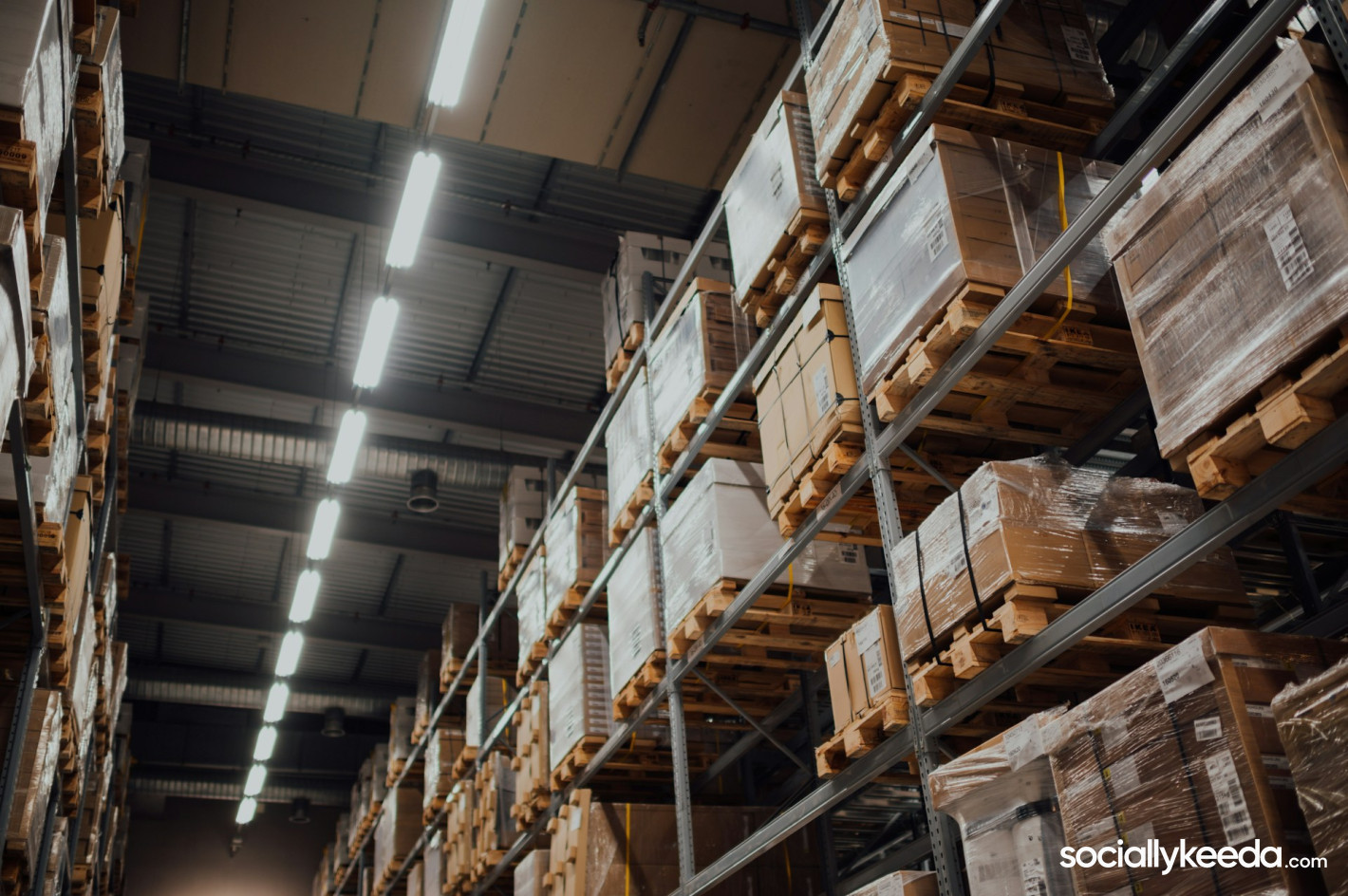
This is why expanding kitchens, caterers, grocers and food manufacturers stop paying retail and open a trade account with a fresh produce wholesaler. Scale is at the heart of the wholesale model. Buying direct from growers and central markets, stock is bought in large quantities and then sold through quickly on low margins per box. High volume fruit and veg wholesalers have buying power because they are buying pallets where your small business is buying punnets. That saving trickles down the chain to whoever is buying volume.
Read also: The AI Boom Is Still Paying Off for the Companies Selling the Infrastructure
The gap is larger than many owners realise. Even in a stable market it can range from 20% to 40% on commodity lines such as potatoes, onions and leafy greens.
And why that gap is so valuable right now: According to ABS data, fruit and vegetable prices rose just 0.1% in the 12 months to April 2026. Produce inflation has literally ground to a halt. Wages, rent, power and freight have not. That means the opportunity doesn't come from waiting for produce to get cheaper. You can create it by buying the SAME produce SMARTER.
The Real Maths Behind Bulk Buying
Here is where it gets interesting.
Take a café which uses 20kg of onions each week. At retail price ($3.50/kg perhaps) that would come to $70 per week or $3,640 annually. Purchasing those onions in 20kg bags from a fresh produce wholesaler at $1.80/kg reduces that weekly spend to $36.
That is $1,768 a year saved. From one ingredient.
Try this now with the top 15 ingredients... voila. There is a full-time wage hidden in that purchase decision.
But unit price is only the first layer. The bigger shifts are structural:
-
Fewer transactions — one delivery a week instead of four supermarket runs
-
Predictable pricing — wholesale agreements smooth out weekly volatility
-
Better payment terms — trade accounts often run 14 to 30 days
-
Consistent quality — same grower, same grade, same spec every time
That third point is far more important than most people realise. If you buy on 30-day terms in volume then the stock is typically sold and turned into cash before the invoice falls due. The business is trading on someone else's cash.
Pretty powerful, right?
The Costs Nobody Bothers To Add Up
Most owners look at two numbers: retail price vs wholesale price. They are missing half the story with that comparison.
Read also: Sales Methodologies: Niche-Specific Guide for Strategic Selling Case Study
Consider time expense. One employee going on three supermarket trips per week, an hour per trip at $32/hour wages spends nearly $5,000 per year in payroll costs before buying a single head of broccoli. A wholesale delivery takes minutes to process.
Finally there's expense of running out. Stock-outs lead to changing menu selections and scrambling to retail purchases. Buying in volume creates a cushion that eliminates that issue.
Where Bulk Buying Goes Wrong
Now for the honest part...
Bulk buying isn't always cheaper. Poorly executed bulk buying is the costliest mistake you can make.
Buying Volume Without Demand Data
Buying three cases because you thought two were "kinda small" last week isn't planning. It's gambling. If you don't know your usage, excess just becomes excess waste.
Food waste is not insignificant. Hospitality represents 16% of Australia's food waste — that's about 1.2 million tonnes annually — in an industry where net margins often hover between 5 and 10%. Throw away one case and you've devoured a huge chunk of your profits.
Ignoring Storage And Shelf Life
Volume has to go somewhere. Storage capacity, shelving and an operational first-in-first-out process become mandatory when order sizes increase. Warm room inventory loss of a pallet of produce is inevitable.
Buy deep on staples, buy tight on perishables.
Read also: What Are Stablecoins? A Blockchain Expert Explains
Tying Up Cash That Is Needed Elsewhere
Equity is currency held in another form. Tying up $8000 of inventory to save $900 doesn't make sense if you were planning on using that $8000 to pay payroll Friday.
How To Build A Buying System That Scales
Here is the approach that works...
Begin with ten. Identify the ten items that consume the greatest amount of spend. Not the most units – the most dollars. Ten items. That list will typically represent the majority of your spend dollars.
Divide the list into two. Put potatoes, onions, pumpkin, apples and citrus in the bulk column. Keep herbs, berries and salad leaves on little but frequent orders.
See how your tracks are being used for four weeks. Actual numbers. No guesses. Four weeks of truthful tracking makes estimating predictable, and predictable is what keeps volume trading safe.
Negotiate. Wholesale pricing isn't set in stone. Agreeing to weekly volume, setting up a standing order or negotiating longer term will almost always net you a better rate, and most wholesalers of fresh produce will shave a price to guarantee a good account.
Lastly, revisit it every quarter. Seasons will change, menus will change and demand will change. A buying plan that no one revisits quickly becomes not a plan.
The Bottom Line On Buying Big
Bulk buying doesn't mean hoarding inventory. It means shifting the unit economics of your business so that every sale has a few dollars more profit than last month.
To quickly recap:
-
Small, frequent orders spread fixed costs across too few units
-
Wholesale pricing rewards commitment and volume
-
The real savings include labour, delivery and terms, not just unit price
-
Waste and storage discipline decide whether it actually works
-
Data beats instinct every single time
Buy right and the business doesn't have to sell more to make more money. It simply continues to do what it already does...just at a lower cost.