
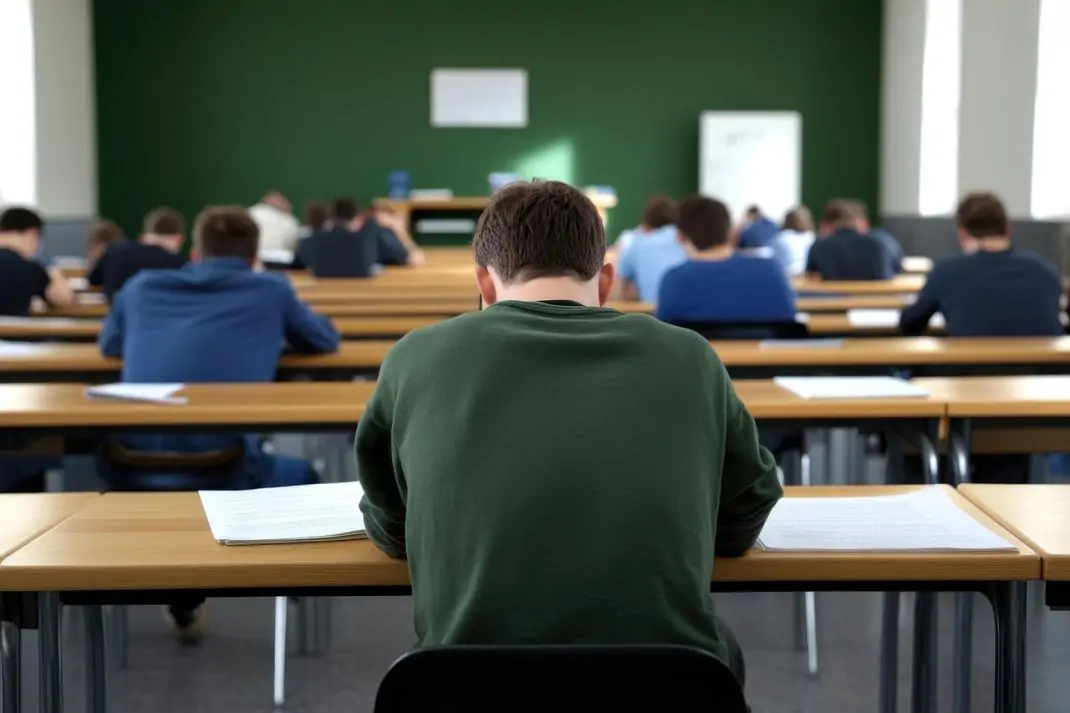
Ever wondered why some students can sit through an entire exam while others seem to fidget in their seats?
The reason may not be in their study habits. It may be the furniture they are sitting on. Statistics from the University of Manitoba state that students spend nearly 80% of their classroom time sitting on chairs. That's right – classroom furniture and seating impact student test-taking performance. And the furniture most students are sitting at during tests is probably not the right one.
Let’s give you a clue…
Most school furniture is probably outdated. This isn't just a slight inconvenience either. The implications of continuing to use bad furniture for students can be significant.
What You Will Learn:
-
A Price Worth Paying
-
Ergonomics And Test Performance
-
Features Every Exam Table Must Have
-
Choosing The Right Exam Tables
The Problem With Exam Furniture
Here's the deal…
Traditional exam furniture is built to be lightweight and stackable, not to support students through marathon testing sessions. So when students take their seat at a shoddily built exam desk for hours at a time, their body will rebel against them. They will be constantly fidgeting, shifting in their seats, stretching, twisting their backs, anything they can do to be more comfortable.
Think about that.
Approximately 30% of students surveyed state they feel uncomfortable in their seats during exams, and the leading cause is poorly designed furniture. That is almost 1 in 3 students who are not performing to their full capability from the get-go.
Ergonomics Matter
Exam conditions are different. When students are sitting down, it's usually for a short time – reading through notes or taking part in a lesson for around 20 minutes, max. They are not sitting for long periods.
Let's consider some facts here:
During a normal classroom lesson, students are constantly moving and turning their heads, shifting from foot to foot, and getting up and down from their seats all the time. Even students with poor posture tend to shift position regularly. This doesn't happen during exams. Instead, they are bolt upright at their desks, head buried in exam papers, often unable to even shift in their seat.
It's no wonder, then, that schools are shifting towards investing in heavy duty exam tables tailored to the specific needs of testing environments. Specialized exam tables are making a big difference in students' comfort and test performance.
Connecting The Dots
Try and picture this:
Student is seated at a slightly too low table, leaning forward in an uncomfortable position. Their shoulders rounded, their spine is being compressed. Their diaphragm cannot function properly, so there is less oxygen going to the brain. The student's focus is split between the exam paper and the persistent discomfort in their body. They never truly 100% focus on the task at hand.
It's a ripple effect…
The discomfort of badly designed furniture results in pressure points forming on the body. The student shifts to try and relieve this discomfort, only to create another point of tension in a different place. Blood rushes to these points of tension, further exacerbating the problem. The cycle repeats and the student's discomfort is now even more distracting.
This is what exam tables do to students' focus.
By providing stable, ergonomic seating support, exam tables allow the students to completely focus on the exam and not have to concentrate on fighting their own bodies.
Exam Tables Features Checklist
Exam tables are not all the same. The best exam tables have certain qualities in common that make them perfect for testing environments.
Height
The most important factor with exam tables is making sure the height is appropriate. Tables that are too tall force students to hunch their shoulders. Those that are too short make them tilt their heads uncomfortably.
Exam tables have a height suitable for all students. This is important because students will come in different heights. A table that works for a Year 11 student will not work for a Year 7.
Surface Space
Exam papers, question booklets, calculators, pencil cases, students need space. The best exam tables give students enough space to spread out their materials but without making it feel crowded.
Stability
Think about what most people are not thinking…
Students write a lot during exams. This means their pen or pencil is constantly pressing down on the table's surface. A cheap, lightweight table will wobble and shake with this action. This micro movement can be a massive distraction. Quality tables are stable enough to prevent this from happening.
Design Flaws That Sabotage Students
Poorly designed exam furniture causes a cascade of body issues.
It starts with a table that's just a little too low. The student compensates by leaning forward and over time, their shoulders become rounded, and neck starts to strain. An hour in and their lower back starts to ache. At the end of a 2-hour exam, they are genuinely in pain.
Ergonomic exam tables combat all of this. When the table is the right height to support a student's natural spine position, they can sit without discomfort. Their shoulders are relaxed, their neck is in a neutral position, and their lower back is properly supported by the chair.
Surface Is The Thing
Exam table surfaces matter more than you may think.
Slippery surfaces make it hard for papers to stay put. Rough surfaces make writing scratchy and uncomfortable. Shiny surfaces cause glare and eye strain.
Premium exam tables have matte-finished surfaces that are just textured enough to keep papers from sliding without disrupting the smooth movement of writing implements. Neutral, muted colors and patterns help students to stay focused while bright colors and complex designs can be subconsciously distracting in a high-pressure environment.
Space-Saving Exam Tables
Space is precious during exams. Schools need to cram as many students as they can into exam halls but keep students spaced to avoid cheating. The best exam tables balance these priorities.
Stackability is important here. When not in exams, schools need to clear spaces quickly. Tables that stack well without being flimsy are the answer. Sturdy when in use but easy to store when not in use.
Exam Tables: Worth The Investment?
Schools on tight budgets sometimes baulk at the costs of investing in premium exam furniture. They are missing out because:
The price of students underperforming is far higher than investing in the right furniture for exams. A single bad exam score can damage a school's reputation, league table standings, and future enrollment. Quality exam tables last far longer than cheap furniture. The return on investment is clear when the cost per student per exam is calculated over the lifetime of the furniture.
Placement, Placement, Placement
Having great exam tables is only half the battle. The other half is having the correct setup.
Exam tables need to be spaced far enough apart that students have elbow room and are not cramped. Light also plays a part in this – students need to be positioned in a way that doesn't get glare from windows or overhead lights landing on their exam papers.
Exam hall temperature is often ignored but is a major factor in comfort levels. Even the best exam tables can't compensate for rooms that are too hot or too cold.
Putting It All Together
Exam tables are not a luxury. Investing in ergonomic exam tables is a no-brainer for schools.
When schools invest in furniture that helps instead of hinders their students, everyone wins. The students can focus 100% on demonstrating their learning. The teachers can be sure that their students' performance truly reflects their ability and is not skewed by external factors like discomfort.
School furniture suppliers are catching up with what scientists have known for years. Proper ergonomic support during exams is not a luxury. It is a requirement for fair assessment and students performing to the best of their ability.
Don't let out-of-date furniture impact your students' performance. The right exam tables provide the foundation for students to succeed and show what they know without getting distracted by their own bodies.