
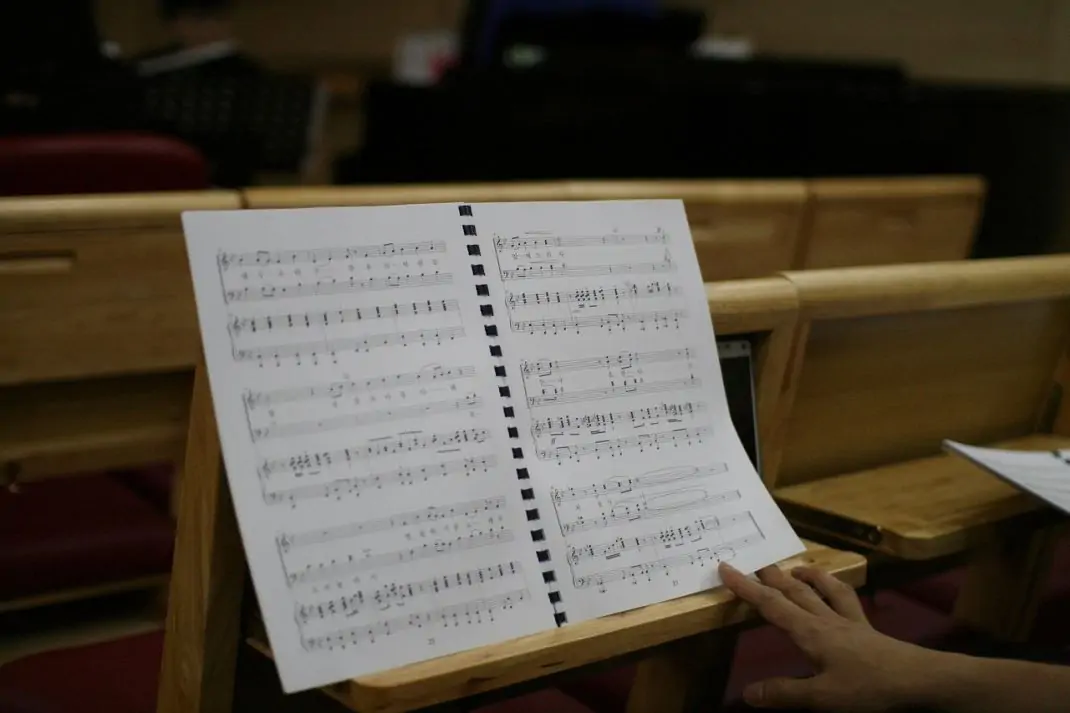
Learning to read sheet music is easier than you might think.
Let's face it. The typical way of teaching kids to read sheet music is plain dull.
Having to sit there and drill notes and rhythms over and over before you can play is frustrating and completely uninspiring.
Students try to read music and lose confidence and motivation when they can't do it quickly. They quit.
But wait!
There are fun and effective ways to teach students to read music that they will love to use. Methods that work for any age and make music reading easier and faster.
So let's get started…
What You'll Learn
-
Music reading is important
-
Start with easy sheet music
-
5x ways to teach music reading that will really work
-
Use technology to make learning faster
Why Reading Music Is Actually Important
Learning to read sheet music is about more than playing the right notes. It's about building mental skills that transfer to all of a child's education.
In fact, statistics show that schools with music programs have graduation rates of 90.2% while those without music education only have a rate of 72.9%.
Wow.
That's a significant difference.
Music reading helps develop pattern recognition, sequential thinking and memory skills that improve math, reading and other academic subjects.
Students learn to decode symbols in musical notation to make meaning of what they hear. This same cognitive process happens when reading language, solving math equations and understanding science.
Start With Free Resources Students Actually Want To Use
Access to age and skill appropriate sheet music is one of the biggest challenges in teaching kids to read music.
You need a variety of sheet music at varying levels of difficulty that also match your students' interests and passions.
This is where free sheet music downloads become a music educator's best friend. You can build a library of pieces in many genres and difficulty levels so you always have something a student will get excited about while also developing their music reading skills.
Plus, when a student gets to choose music they love, they're much more motivated to practice reading those notes.
Use Color Coding
The easiest way to get beginners to remember notes is with color coding.
It sounds simple but it's absolutely crazy effective. Give each note or group of notes a different color. Students can use colored pencils, stickers or highlighters on their sheet music.
This visual cue helps their brains make the connection between the note on the staff and the corresponding note on their instrument. After a few weeks, most students don't need the color anymore because the pattern is ingrained in their memory.
The key is to fade out the color cues over time.
Make it a Game
Students love games and playing them! So why not make music reading practice a game?
Gamification takes the fun and rewards of playing games and applies it to music reading practice. Points, levels, achievement badges, rewards and competitions. It's a great way to make music reading practice addictive.
Strategies that gamify music reading include note naming races (how fast can you name notes), rhythm battles (competing to clap complex rhythms), sight-reading challenges (earn points for new sight-reading pieces), musical bingo (find note names or rhythms), and more.
And here's a bonus secret…
Adding a social aspect makes gamification even more engaging. Students compete and support each other, cheering on each other's wins.
Teach Reading Through Songs Students Know
Golden trick for beginners. Instead of staring at random notes and exercises, begin by using music students already know and love.
When students can hear the melody in their heads, matching up those sounds to the notes on the page becomes much easier.
Use popular songs, movie themes, viral hits that your students recognize and love. Then show them how that familiar music is represented by notation on the page.
Students have an auditory reference for the sounds, motivation from knowing the song and success comes much faster. As their skills develop, you can use more and more challenging songs.
Multi-Sensory Learning Is The Future
Sometimes I think the smartest music teachers just mix everything up together, you know? They don’t just stick to one way. They use eyes, ears, hands, and even feet too. Like, when we read music, we don’t just look at notes—we feel it, move it, say it, maybe even stomp it out. It’s kinda fun, actually.
One time, my teacher made us tap beats on our arms and legs while reading the notes, and somehow my brain just got it. Then we walked around the room, counting steps for note lengths. Felt silly, but it worked good. Sometimes we even sing the letters while pointing at them, like “A, B, C,” loud as anything. And she’s got these texture boards, rough or smooth, for different rhythms. Weird, but my hands remember it better than my head does.
Kids who learn like this end up doing way better—like, way more than double. Guess using all your senses really does something magic inside your brain.
Technology Tools That Actually Work
Why not use technology to help students learn music reading?
There are some amazing apps and software tools designed specifically for music literacy education. These programs give students instant feedback, adjust to their difficulty level and have engaging interfaces.
Best tools include note-reading apps/games, interactive sheet music that highlights notes as a song plays, recording tools so students can hear their progress, and digital flashcards for note recognition.
But an important note…
Use technology as a supplement, not a replacement. Choose tools that support what you've already been teaching.
Maintain The Momentum
Learning to read music is a marathon, not a sprint.
Students need consistent practice, plenty of encouragement and some markers of progress. Celebrate wins like first successful sight-read, mastering a tricky rhythm, or reading a whole page without stopping.
Remember that 92% of children have access to music education, yet only 49% actually participate in a music program. Traditional methods are daunting.
By making music reading fun and rewarding, more students will stay engaged on their musical journey.
Wrapping It All Up
Learning to read music doesn't have to be a boring lesson of endless drilling.
These fun and effective teaching strategies will make learning to read sheet music exciting and fast for every student. Whether you're teaching music reading to a young beginner or older students struggling to improve, these methods work.
Start with one or two strategies and see how your students respond. You'll see improved engagement during lessons, faster development of skills and more enthusiasm about practice.
The goal isn't just to have students that can read music. The goal is to develop a lifetime of musicians that love making music and have the skills to explore any genre.
This is what great music education is all about.