


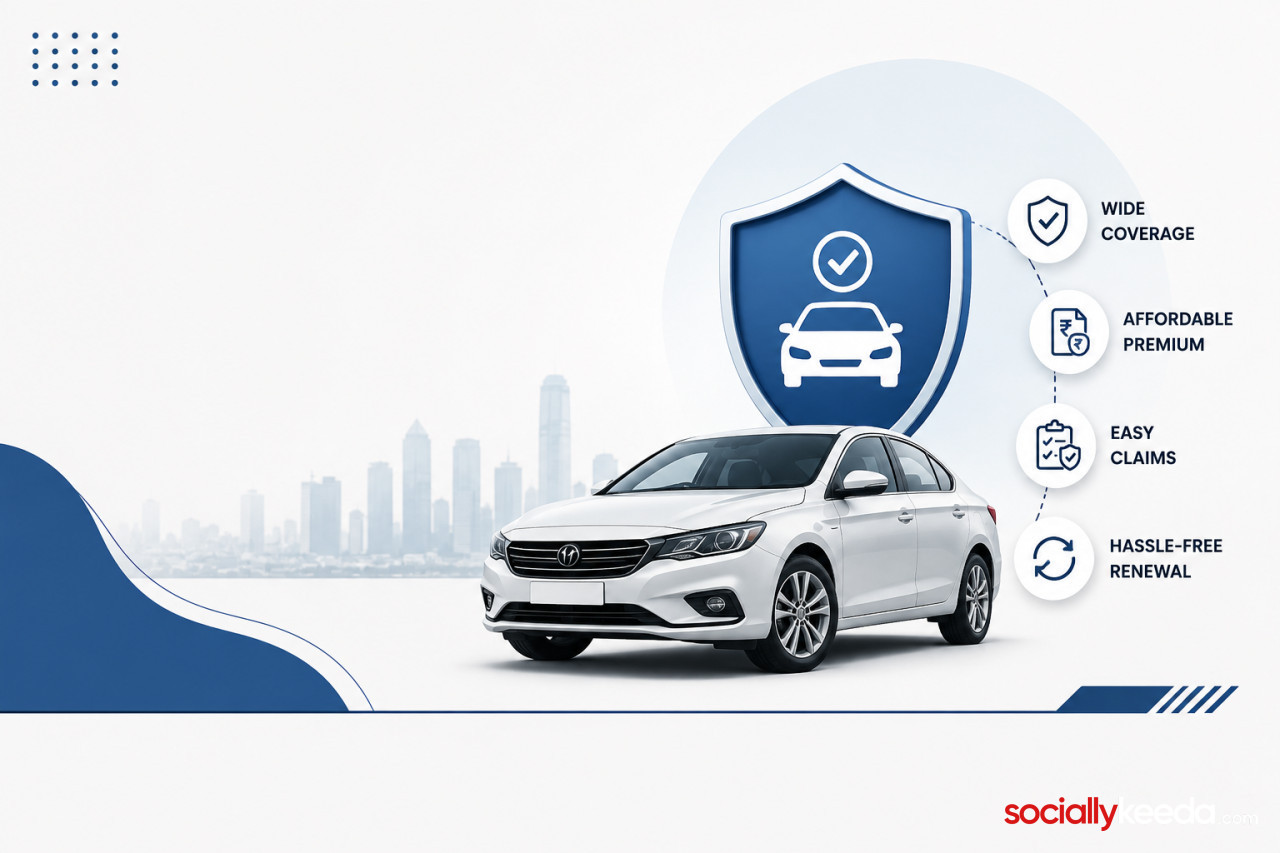
Owning a car comes with several responsibilities, and keeping the insurance policy active is one of the most important. A valid policy provides financial protection against a range of risks, while also helping vehicle owners meet mandatory legal requirements. However, many people pay attention to their policy only when the expiry date approaches. Understanding the renewal process in advance can make it easier to avoid a coverage gap, review your existing protection and make informed decisions.
Why Renewing Your Policy on Time Matters
An expired policy can leave you financially exposed if your vehicle is involved in an accident, stolen or damaged by an unforeseen event. Depending on the type of car insurance, you may have to pay repair or replacement costs from your own pocket.
Driving without the required insurance can also result in penalties under Indian law. More importantly, if an accident causes damage to another person or their property, being uninsured can create a significant financial burden.
Renewing before the expiry date helps maintain continuous protection. It can also prevent unnecessary complications associated with an insurance lapse.
What Happens When a Policy Expires?
If you fail to renew your policy before its expiry, the coverage generally stops from the stated expiration time. Any incident occurring after that point may not be covered.
A break in coverage can also mean that you need to go through additional steps when purchasing a new policy. Depending on the insurer and circumstances, an inspection of the vehicle may be required before coverage is issued.
The No Claim Bonus (NCB) earned during previous policy periods is another factor worth considering. If the policy is not renewed within the permitted period, accumulated benefits may be affected. The exact rules can vary, so checking the policy terms before allowing it to expire is advisable.
Review Your Existing Coverage Before Renewal
Renewal should not simply mean paying the same premium again. It is a good opportunity to assess whether your current policy still matches your needs.
Read also: How to Prepare Financially When Your Family Structure Changes
Start by checking the type of cover you have. Third-party insurance covers your legal liability towards third parties, while comprehensive policies generally provide broader protection for the insured vehicle in addition to third-party liability.
Consider how your vehicle is being used, its current value, your driving patterns and the risks you are most concerned about. A policy that was suitable when you purchased the car may not necessarily remain the best fit several years later.
Check the Insured Declared Value
The Insured Declared Value, commonly called IDV, represents the approximate market value assigned to the vehicle for insurance purposes. It becomes particularly important in situations such as theft or total loss.
A higher IDV may generally result in a higher premium, while choosing a substantially lower value can reduce the premium but may also mean receiving less compensation in a total-loss situation.
Rather than selecting an IDV solely to reduce the premium, compare the available values and understand how they affect your overall protection.
Evaluate Add-On Covers Carefully
Comprehensive policies may offer optional add-ons designed to address specific situations. These can include zero depreciation, roadside assistance, engine protection, consumables cover, return-to-invoice protection and other options.
However, not every add-on is necessary for every driver. The usefulness of an add-on depends on factors such as the vehicle's age, location, usage and the owner's willingness to bear certain expenses personally.
Read also: Common Reasons Injury Claims Get Denied and How to Respond
Instead of selecting every available option, identify the risks that are relevant to you and compare the additional premium against the potential benefit.
Compare Premiums, But Do Not Focus Only on Price
Price is an important consideration, but it should not be the only factor used to evaluate a policy. Two policies with similar premiums can offer different features, exclusions, deductibles and claim conditions.
When comparing options, look at the coverage limits, deductibles, exclusions, add-ons, cashless garage network and claim process. Reading the policy wording can help identify restrictions that may not be obvious from a premium comparison.
A slightly cheaper policy may not necessarily provide better value if it offers significantly less useful coverage.
Understand the Deductible
A deductible is the amount that the policyholder may need to contribute towards an eligible claim. Policies can include a compulsory deductible, while some may also involve a voluntary deductible selected by the customer.
Choosing a higher voluntary deductible can reduce the premium, but it also increases the amount you would have to pay when making a claim. Select a deductible based on what you could comfortably manage rather than choosing a higher amount simply to lower the renewal cost.
Keep Your Information Updated
Before completing renewal, verify the details listed on the policy. Check the vehicle registration number, owner's name, address, contact information and other relevant details.
If the vehicle has changed ownership or there has been any significant change in the information provided to the insurer, make sure the records are updated appropriately.
Read also: Why a ₹10 Lakh Health Insurance Policy May Not Be Enough in 2026
Accurate information can make the claims process smoother and reduce the possibility of disputes caused by incorrect or outdated details.
Keep Important Documents Accessible
It is useful to maintain digital or physical copies of your policy document, registration certificate and other relevant vehicle records. Keeping these documents accessible can save time when filing a claim, dealing with an accident or completing future policy-related formalities.
You should also note the policy's expiry date and set a reminder well in advance. Waiting until the last day can leave little time to compare alternatives or resolve technical and documentation issues.
Avoid a Coverage Gap
One of the simplest ways to protect yourself from unnecessary risk is to begin the renewal process before the existing policy expires. This gives you enough time to review your coverage, compare available options and make changes where necessary.
If the policy has already expired, avoid assuming that the previous protection continues automatically. Check the status with the insurer and understand whether inspection or other formalities are required before the new cover becomes effective.
Making Renewal a Regular Review
Insurance should be treated as an ongoing part of vehicle ownership rather than an annual formality. Changes in your car's value, usage, driving habits and financial priorities can all affect the type of protection you need.
A thoughtful review during car insurance renewal can help ensure that you are paying for coverage that remains relevant while avoiding unnecessary features. Taking a little time to check the policy, understand its terms and compare available protection can ultimately provide greater confidence every time you take your vehicle on the road.







Comments
No comments yet — be the first to share your thoughts.