



As artificial intelligence begins to penetrate virtually every corner of the 21st-century economy, Walmart is taking a surprisingly firm stance: while AI might improve customer service, it will not determine how much a customer pays.
In a statement published on September 25, Walmart CEO John Furner reiterated the retailer's long-held "Every Day Low Prices" approach and also made a new promise: Walmart will never base its pricing on a customer's income, shopping history, time pressure, or likely willingness to pay more for a given product. "We price the product, not the person," he stated.
The distinction matters because AI makes personalized pricing much easier to imagine — and potentially implement. Retailers are now gathering huge troves of behavioral data, and with machine-learning systems, they can crunch that data at a scale that a conventional pricing team wouldn't be able to. An algorithm, for example, could determine what a shopper might be willing to pay. That is exactly the model that Walmart says it will not follow.
Walmart's pricing pledge comes as the retailer broadens its adoption of digital shelf labels, which enable prices to be changed electronically without requiring store associates to swap out paper tags. The retailer said the tech is aimed at ensuring shelf prices match checkout prices and reducing the time it takes to swap out labels. Nearly 2,300 Walmart U.S. stores already had the tech as of March, the retailer said, and it expects to go chain-wide within a year.
Read also: Semiconductor Boom Is Getting Bigger Than AI
The timing is also notable. While digital labels are making price changes quicker and easier, that capability has also raised questions about whether retailers could one day use the technology for personalized pricing. Walmart is now explicitly rejecting that direction.
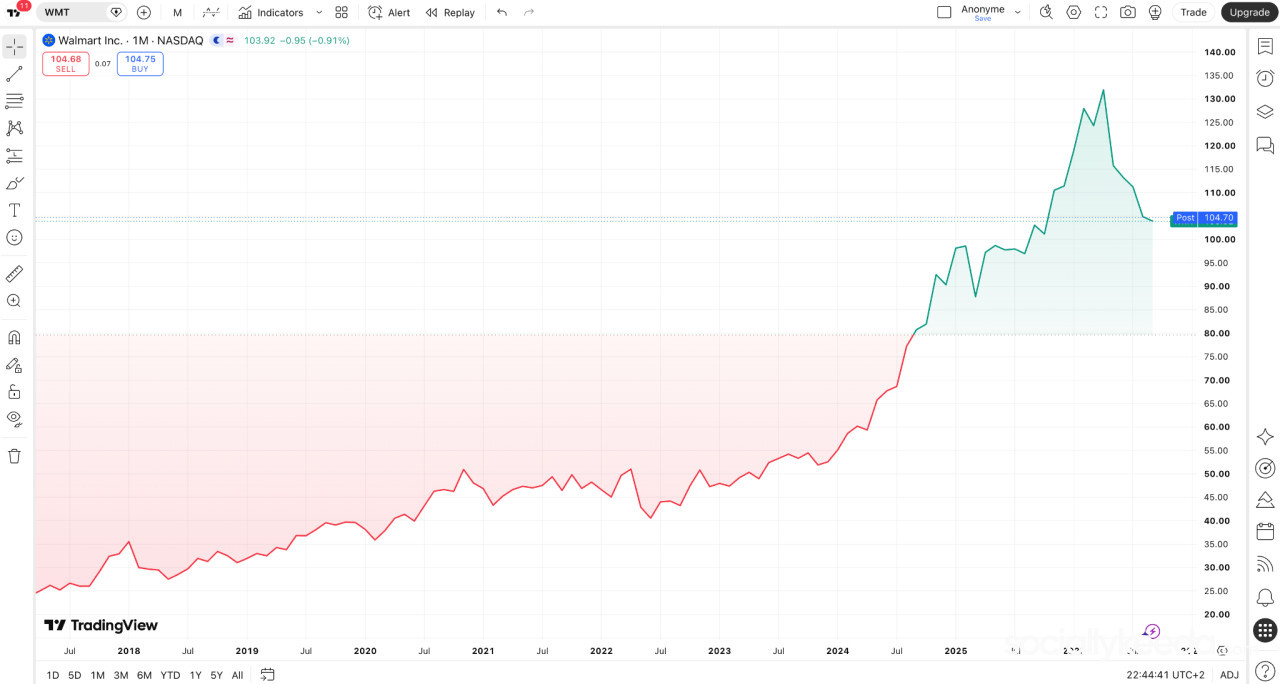
Walmart is doing this at a time when Dow futures remain highly sensitive to everything happening in the AI space. It is quite remarkable to see a giant like Walmart bucking the trend toward unlimited AI — a stance that could resonate with investors concerned about the risks of increasingly aggressive AI adoption.
Read also: Development of the Packers and Movers App
That extends, too, to Sparky, Walmart’s AI shopping assistant. Furner says information consumers give Sparky won't be used against them to raise prices or hide lower-priced products that meet their shopping needs. Walmart said consumers can "opt-in to provide us additional information to receive more personalized assistance and that information is not intended to be used to charge them more."
Importantly, Walmart isn't saying that prices will never change. Prices can rise when the cost of a product or its delivery increases, or fall when Walmart is able to pass savings on to consumers. The company is ruling out something more specific: using personal information to decide what an individual consumer is charged.
That difference is indicative of a broader issue coming into focus as everyone begins to build out the AI economy: If the ability exists to personalize everything, does everything need to be personalized?
Read also: How Bulk Buying Changes the Economics of a Growing Business
The FTC has been investigating personalized pricing as well, warning that sellers using personal information to set prices could trigger disclosure requirements under consumer-protection laws. The agency has said it does not have the ability to restrict personalized pricing entirely but has expressed concern about consumers not knowing that their personal information may have influenced the price they see.
For Walmart, then, this is more than a pronouncement about an algorithm. It's a way to hold on to a business philosophy that has characterized the retail giant, one of the largest companies in the S&P 500, for years amid the march of technology.
As concerns grow about allowing AI to act as the middleman between corporations and consumers, Walmart seems to be clarifying that certain decisions shouldn't be handed over to algorithms by default.
AI can recommend the product. It can help locate it. It can improve the shopping experience.
But under the framework Walmart has outlined so far, it won't decide that one customer should pay more simply because an algorithm happens to know more about them.








Comments
No comments yet — be the first to share your thoughts.