

A stock trader encounters a fairly large selection of stocks to choose from. Filtering stocks effectively is crucial in identifying trading opportunities that align with your strategy. Here are some steps you can take to help you with filtering stocks to trade:
1. Define Your Trading Style
The first thing a trader needs to do is to understand their personal trading style. Knowing what type of trader you are helps narrow your stock choices. Here are three common types of traders and what they look for:
-
Day Traders: Look for stocks with high liquidity, tight spreads, and significant intraday price movements.
-
Swing Traders: Focus on stocks with clear trends and patterns over a few days or weeks.
-
Long-term Investors: Seek stocks with strong fundamentals and steady growth potential.
2. Use Stock Screeners
The next thing a trader can do to simplify the filtering process is to use a stock screener tool, which allows setting specific criteria and helps to find stocks that fit a certain trading style. Most screeners let you filter stocks using both technical and fundamental criteria.
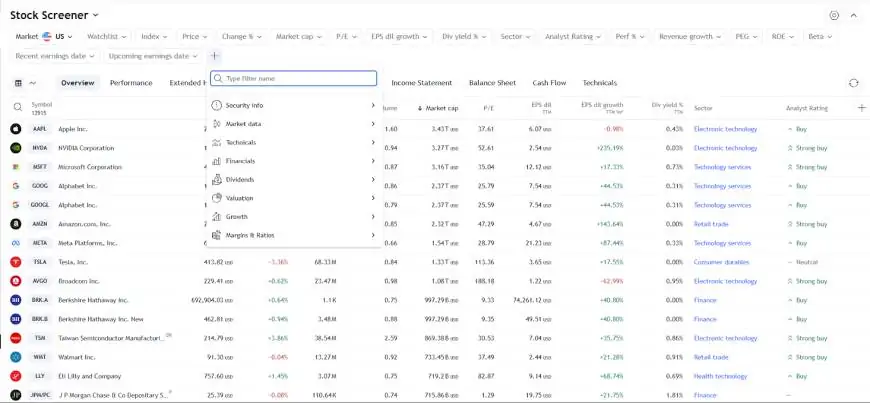
A. Technical Filters
When applying technical filters, traders can set specific criteria and parameters using a number of technical indicators, such as, volume, moving averages, oscillators, and more. For instance, you might focus on trending stocks that are trading above a certain moving average, aligning with your trading style.
B. Fundamental Filters
For a deeper look into a company's financial health, traders can apply filters that reflect the financial condition of a stock. These inputs allow traders to evaluate and identify undervalued or overvalued stocks. Some inputs that can be included in fundamental filtering are as follows:
- Price-to-Earnings (P/E) Ratio
- This parameter helps identify undervalued or overvalued stocks based on their industry averages. Dividend Yield
- Traders looking for stable profits can use this filter to identify companies offering attractive dividend yields. Debt Ratio
- By using this data, traders can assess a company's stability and its ability to carry out finance operations.Earnings Growth
- Use this filter to find companies with consistent earnings growth, an indicator of potential long-term success.
- Filter by Sector and Industry
Another thing to consider is the stocks’ sector and industry. Certain sectors might thrive in specific economic conditions, while others struggle to compete in the global market. By focusing on sectors and industries with growth potential, a trader can avoid stagnant companies and increase chances of success.
4. Monitor key events
Monitoring important economic and political events can provide valuable insights into potential stock opportunities. For example, the release of positive data on a particular sector can also impact that stock's performance, making them more attractive to traders. To monitor the release of such data, traders can use tools like the economic calendar.
These are some steps traders can take to filter and select stocks for trading. However, to achieve consistent and reasonable profits, traders must have a proven trading strategy, as well as effective risk and money management practices.