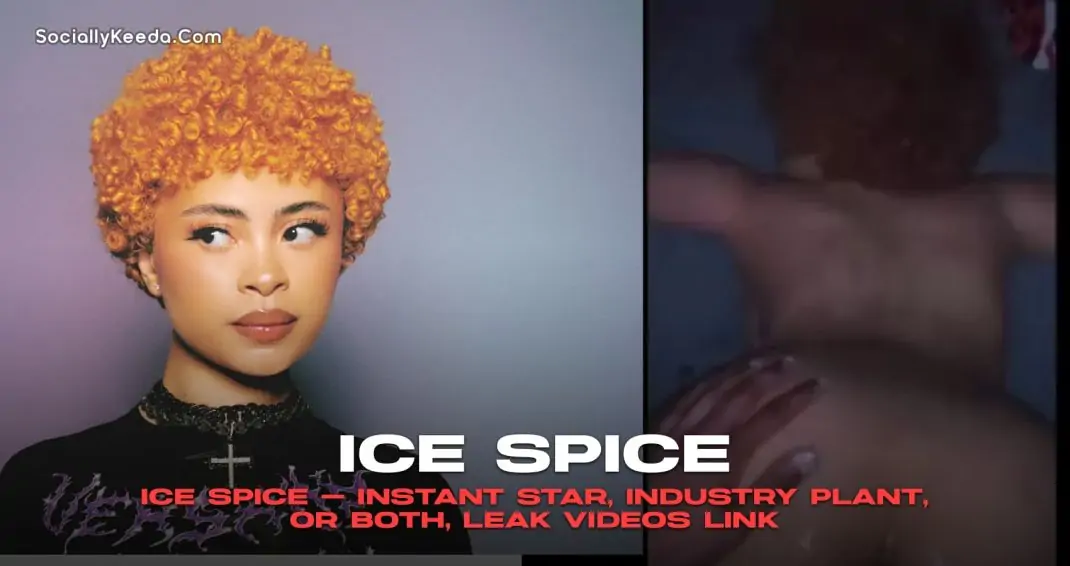
If you’ve spent even five minutes scrolling through Twitter, TikTok, or the comment sections of music videos over the last few years, you’ve probably bumped into two things: 1) a curly red afro that won’t quit, and 2) a whole lot of people arguing whether Ice Spice is a genuine breakout star or a carefully-crafted industry product. The rapper exploded onto the scene fast — and fast-growing things attract a LOT of attention (and a LOT of shade).
So let’s unpack the story, the receipts, the people behind her, and why fans are split between “she’s talented!” and “this smells fishy.”
I’ll be using everything you pasted (thanks — great cliff notes!) and weaving it into a readable, no-nonsense deep dive. I’ll add examples and plain-English analysis so you can decide for yourself. Ready? Let’s go.
Who is Ice Spice? The basics (so we’re all on the same page)

-
Real name / birth: Born January 1, 2002.
-
Background: Bronx, New York — African-American father, Dominican-American mother. Raised in Fordham Road.
-
Early influences: Dad was an underground rapper, but Ice Spice says she didn’t grow up thinking, “I’ll be a rapper.” Home playlists were wide — soca, Latin pop, hip-hop — and she listened to Jay-Z, 50 Cent, Wu-Tang, Lil’ Kim, Nicki Minaj.
-
Schooling: Sacred Heart High School (Yonkers), graduated 2018. Attended SUNY Purchase studying communications but dropped out — felt it wasn’t the right place.
-
First recordings: Sent freestyles to producer Riot USA; released Bully Freestyle on SoundCloud in March 2021. Viral social moments (like a Twitter “busted” challenge) primed the audience before the track even hit.
The meteoric part: how she blew up (timeline + key moments)
-
2021:Bully Freestyle drops; Apple Music playlists it immediately (New York playlist), which is huge visibility for a new artist. She keeps releasing music with Riot USA producing.
-
Late 2021:No Clarity (November) — by the pasted notes, this later reached ~2 million Spotify streams and 10 million YouTube views. Comments were mixed from the jump.
-
Summer 2022: The big one — Munch becomes a viral moment. A leaked DM from Drake (promising to spin it on his radio) and subsequent plays on his platform gave the record a massive boost. Munch went viral on Twitter and TikTok and charted on Billboard’s R&B/Hip-Hop lists and bubbling under Hot 100. The WorldStar upload reportedly hit 46 million views.
-
2023 — The breakout year: debuted EP Like…? (Pitchfork gave it a 7.6). Collaborations and features poured in: PinkPantheress remix (“Boy Is a Liar Pt. 2”) peaked at #3 on Hot 100, Princess Diana remix with Nicki Minaj peaked at #4, Taylor Swift’s Karma (Remix) saw her get to #2 — overall, Ice Spice amassed multiple top-5 Hot 100 hits in 2023.
So — that’s a quick scoreboard. Definitely not a one-hit wonder.
Why the controversy? The three big theories people keep naming
People don’t just disagree about the music — they argue about how Ice Spice became big. Let’s break down the main claims and the evidence people point to.
1) Industry connections — the “made, not grown” argument
There’s a long list of people and institutions around Ice Spice that raise eyebrows:
-
Manager: James Roseman Jr. — son of James “Jimmy Henchman” Roseman (a historic rap manager figure who later went to prison). Roseman Jr. grew up around artist management and industry networks.
-
Producer: Riot USA — met Ice at Purchase College. Riot is the son of DJ Enuff, who was Notorious B.I.G.’s road DJ and worked at Hot 97. DJ Enuff’s Hot 97 ties are real muscle in NYC hip-hop radio and placements.
-
Label: 10K Projects — founded by Elliot Grainge, son of Lucian Grainge, chairman & CEO of Universal Music Group. That’s a direct pipeline into major-label muscle and connections.
-
Media / influencer support: DJ Academics has frequently discussed Ice Spice and — according to some reports — has been hired by labels to help promote artists (he’s admitted working with 10K Projects on other projects). Drake’s early push (the flying-to-Toronto moment and OVO Fest sightings) added to the sense that a big machine was behind her.
Those relationships don’t prove fraud — but they sure look like a fast-lane to visibility. And when a new artist’s videos already look high-budget, the “how’d they afford that?” questions get louder.
Ice Spice Viral Leak Videos Link
WATCH THE VIDEO 1 - CLICK HERE
WATCH THE OTHER VIDEO - CLICK HERE
2) Marketing, branding, and optics (the “packaged star” argument)
Ice Spice’s image is tight and instantly recognizable: curly red afro, signature jewelry (reports mention a custom diamond piece that reportedly cost around $100,000), consistent styling, dance-heavy videos. Her brand rolled out cleanly from day one.
Two points people use as proof of packaging:
-
Many breakout artists have rougher first visuals until budgets increase. Ice’s videos looked polished early on.
-
The narrative of “underground to major collab” was fast-tracked — a pattern conspiracists call classic “plant” behavior.
3) Colorism and industry taste (the “this is about race/looks” argument)
Some critics argue that colorism played a role — that Ice Spice’s lighter complexion and look made her more palatable to mainstream pop and industry gatekeepers. It’s a sensitive but longstanding conversation in music and media: which Black artists get pushed, and why.
The music vs. the narrative: what do fans actually say?
From the comments and reactions highlighted in your paste:
-
Some fans praise her flows, creativity, and vibes.
-
A chunk of commenters mocked songs like No Clarity and Munch, leaving scathing lines: “this ain't getting us out the hood — it's moving us across the street” and “she never disappoints when it comes to disappointing.”
-
The like:dislike ratios on some uploads were skewed; people noticed the twerking-heavy visuals and debated whether sexuality = artistry or just attention-getting.
It’s worth noting that controversy itself is a promotional engine. Heat, for better or worse, keeps people streaming and talking.
Receipts that fuel the “industry plant” theory (and counterpoints)
People have connected a lot of dots. Here are the main ones and how to think about them.
Receipts people cite:
-
High production value from early releases.
-
Industry-connected people (manager, producer, label) around her before and during her rise.
-
Big-name cosigns (Drake plays the track, Nicki Minaj collabs, Kardashians interaction) that came very soon after breakout tracks.
-
Pitchfork rating and major press despite modest EP sales (the EP reportedly did ~15,000 first-week units, while tracks had millions of streams beforehand).
Counterpoints:
-
The music business is networked; many artists with industry families or connections still have to earn public support. Connections open doors — they don’t always guarantee longevity or fan love.
-
Viral platforms (TikTok, Twitter) can turn small plays into huge exposure fast. Sometimes, a single viral meme or clip is worth millions of streams.
-
Collaborations can be strategic and mutually beneficial — Nicki and others feature rising artists all the time to stay culturally plugged-in.
So: receipts exist. They show access. They don’t conclusively prove malicious, engineered fakery — but they do make the “organic” narrative look tidy only if you ignore how many connecting threads there are.
Anatomy of the “masterclass” marketing (what 10K + team likely did well)
Whether you buy the industry-plant theory or not, Ice Spice’s team executed textbook modern pop-rap marketing:
-
Strong, consistent image (hair+jewelry+attitude) that’s highly memeable and copyable.
-
Platform targeting: early playlisting, viral danceable hooks (Munch), and TikTok-ready lines.
-
Strategic cosigns: getting spins from huge artists, OVO Fest cameos, and remixes with mainstream stars.
-
Controversy leverage: polarizing comments create engagement — engagement = algorithms push = more views.
That’s not shady on the face of it — that’s marketing. Whether it was paid or organic promotion is where opinions split.
Ice Spice’s own words and struggles
Your paste includes her reflections: she admitted feeling nervous to put out music because of hate and spoke about the weirdness of people loving you only when "nobody else does" vs. when you have mainstream fans. She’s also said Drake’s public distancing after initially supporting her was confusing. She’s spoken about being shy in acting classes and pivoting to rap later. These glimpses humanize her — she’s not a robot, and critics sometimes forget that real people absorb the vitriol.
Will she last? Long game vs. flash-in-the-pan
Factors that could sustain her:
-
Consistent, good music — more than catchy one-liners; depth, range, and evolution matter.
-
Smart collaborations — mixing with established stars (Nicki, Taylor Swift) gave her chart bonafides.
-
Brand updates — artists who refresh their sound and look maintain interest.
Risks that could sink her:
-
Too much controversy, not enough craft. If the narrative becomes “manufactured” without musical growth, listeners move on.
-
Overreliance on viral moments. Virality can spike streams but isn’t a substitute for solid albums and live performance credibility.
At the end of the day, the industry plants die-hard theory and the “organic star” narrative aren’t mutually exclusive. She can simultaneously be talented, well-managed, and fast-tracked by powerful networks.
Verdict? What to believe (short answer)
You don’t have to pick just one: Ice Spice probably benefited from significant industry connections and smart marketing — but she also put out music that caught on in virality-friendly formats and carved a memorable image. Those things combined gave her a rocket boost. Whether that feels like “cheating” or “playing the game well” is subjective.
If you want my two-line human take: the music industry has always been a mix of hustle, talent, and who-you-know. Ice Spice’s story looks like all three rolled into one bright, loud package. Does that make her fake? Not necessarily. Does it make her rise engineered? Absolutely — in part. The only real test is whether she stays artistically interesting when the machine’s engines cool down.
Quick takeaway list (for the tl;dr crowd)
-
Ice Spice: Bronx-born (2002), early SoundCloud releases in 2021; breakout with Munch in 2022.
-
Big boosts: Apple Music playlisting, Drake plays, viral TikTok, big remixes in 2023.
-
Industry ties: manager James Roseman Jr., producer Riot USA (son of DJ Enuff), signed to 10K Projects (Elliot Grainge).
-
Controversy drivers: high production early, rapid major-cosigns, suspicious timing around label deals, and strong polarizing visuals.
-
Conclusion: Part talent, part network, part marketing — the long-term judge will be her next few projects.
Final human
Ice Spice’s rise is a case study in how modern pop culture and old-school industry power mix. She’s a lightning rod: some love her, some are side-eyeing every move, and the industry folks? They’re probably counting streams. Whether you stan or you roast her in the comments, she’s a cultural moment — and those don’t come along every day.
If you enjoyed this breakdown (or want an even messier deep dive into specific receipts like the Drake timeline, Riot USA’s Hot 97 ties, or how 10K Projects operates), say the word and I’ll dig in — human-style, no robot-speak.