

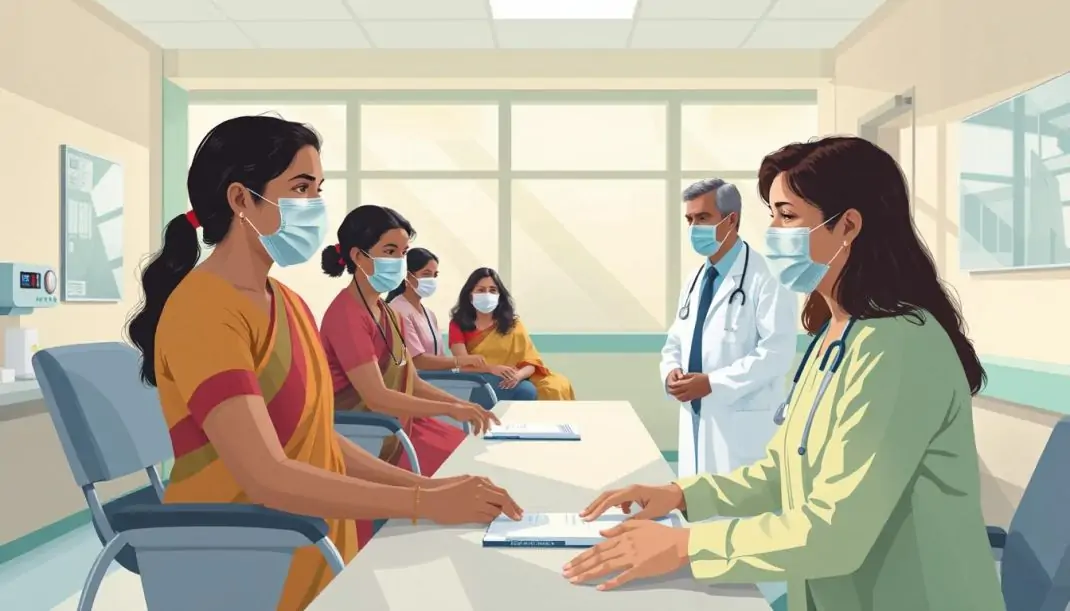
In a nation as large and heterogeneous as India, quality healthcare has always been out of reach. For more than decades, countless families, particularly those based in rural or poor regions, were unable to pay for hospitalisation or even life-saving drugs. But in recent years, this has slowly changed. With the increasing popularity of government health insurance schemes, healthcare is becoming inclusive and affordable for all, rather than just the privileged few.
Bridging the Urban-Rural Divide
One of the largest challenges in India's healthcare system has been the difference between urban and rural availability. In the cities, private hospitals and modern health facilities are readily available. However, in the villages, individuals have to go to great lengths just to meet a doctor. Government health insurance programs like Ayushman Bharat – Pradhan Mantri Jan Arogya Yojana (PM-JAY) are closing the gap.
These programs ensure that even individuals in far-flung regions can avail themselves of cashless treatment at empanelled hospitals. Through collaboration with both private and public hospitals throughout India, the government has made good-quality care accessible to millions who previously had none.
Making Healthcare Affordable for All
Medical expenses can be prohibitively expensive, even for middle-income households. One hospitalisation can wipe out years of savings. Here, government health insurance programs come into their own. Under PM-JAY, for instance, beneficiary families are given up to ₹5 lakh per annum coverage for hospital stays, surgeries, and other interventions.
What’s remarkable is that the beneficiary does not need to pay anything at the hospital. The treatment is completely cashless. This removes the biggest barrier of tension and fear of high medical costs. By the Government Health Scheme's support, life is changing for families who once had to choose between health and financial stability.
Encouraging Preventive and Early Care
Government policies are not only about crisis treatment. Most plans today are aimed at preventive medicine—promoting periodic checkups, vaccines, and early detection of illnesses. This is critical because getting sick early often means lower costs and a faster recovery.
For instance, schemes of the National Health Mission (NHM) and PM-JAY also lay stress on health camps, screening, and electronic health records. These measures are taking India's health model forward.
Empowering Women and the Elderly
A second significant factor is inclusiveness. Most government health insurance programs focus on vulnerable segments such as women, children, and the elderly. Programs such as Rashtriya Swasthya Bima Yojana (RSBY) and the Central Government Health Scheme (CGHS) have paved the way for the previously excluded from the healthcare discussion.
For senior citizens, particularly those who are not drawing pensions or regular income, these programs guarantee respect and care in medical crises.
A Step Toward Health Equity
True, there's still much to be accomplished—greater awareness, improved infrastructure, and easier claim procedures—but the strides made until now cannot be disputed. Not only is the government health insurance scheme reducing the cost burden of healthcare, it's also upholding equality, hope, and trust in the system.
In brief, these schemes are not merely treating more people—they're giving each Indian an equal opportunity for good health. And in a country of more than a billion, that's a mighty great step forward.


