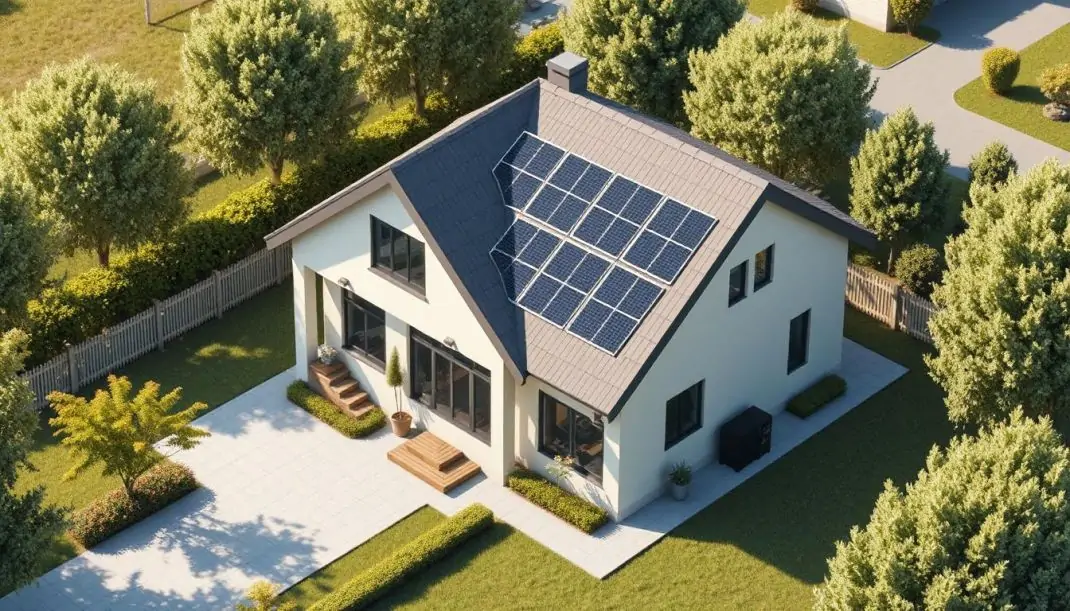
The solar battery is an important part of your solar panel. It stores all the electricity your solar panels generate during sunny hours, so you can tap into it when the sun goes down or even on gloomy, cloudy days. And yes, it’s a lifesaver during power cuts too.
So let's explore what a solar battery is.
What is a Solar Battery
A solar battery saves excess energy produced by your solar panels during the day which you can use later. A battery can also help you in many other ways. You can use it to reduce reliance on the grid and also use it to make your important appliances work during outages. It is like a household-sized power bank.
The main types of solar batteries are:
|
Type |
What it is |
Good if you want |
|
Lead-acid (tubular/flooded) |
Mature and proven chemistry. Often used in deep-cycle tubular batteries for solar. |
Lower upfront cost and long running life for proper maintenance. |
|
Sealed lead-acid (AGM/Gel) |
Maintenance-free versions of lead-acid with lower water topping needs. |
Less maintenance, still cost effective. |
|
Lithium-ion |
It is newer, lighter and more efficient chemistry with long cycle life. |
Compact size and minimal maintenance. Also, a better round-trip efficiency. |
How to Choose the Right Solar Battery
-
Work out your daily needs. Look at your electricity bill and divide your kWh by 30. You will get your daily average.
-
You need to decide how many hours or days of backup you want.
-
Account for usable capacity. Batteries are rated in Ah or kWh. If a battery is specified at 200 Ah and 12 V, usable energy is about 200 × 12 = 2,400 Wh or 2.4 kWh. It is before the depth-of-discharge limits. If you use only 80% routinely you need to multiply accordingly.
-
Factor inverter and system losses. Allow around 10 to 15% extra for conversion and distribution losses.
Choose a battery that can power the things you cannot afford to lose. You can increase the capacity later. This can help you to power more appliances. Product pages and sizing tools on manufacturer sites can give practical examples.
Maintenance
Maintenance changes by battery type:
-
Lead-acid (flooded/tubular): You should occasionally top up the battery with distilled water. Make sure you keep the terminals clean. You should also check the electrolyte levels regularly. Some tubular designs need only minimal topping, with initial intervals lasting several months.
-
Sealed and lithium batteries: They are largely maintenance-free. But you should keep them in a ventilated and cool place. You should also follow charging recommendations.
You can see problems early with a simple annual health check from a trained technician. Getting your battery checked each year helps you keep it running longer.
Safety and Installation Basics
Batteries have energy. And some also have chemicals inside. You need to handle them carefully. You should always make sure that a trained person does the installation.
-
Make sure there is good and proper ventilation. This is important especially for lead-acid batteries.
-
Ensure your battery is kept there securely.
-
You should always check the wiring. You should see if it is done correctly.
-
Pair your battery correctly with your inverter. You should do this based on chemistry.
-
Confirm if your battery can be kept indoors.
-
Check your manufacturer’s datasheets or website. There you can find all the installation instructions.
Warranty and Real-world Performance
Warranty lengths can be very different. It depends on the model. Some solar batteries come with multi-year warranties. Others focus on specific cycle counts. It can also be performance guarantees. Make sure you read the print carefully. Warranties often will give you the operating temperatures, depth of discharge limits and required maintenance. You can use the datasheet to check how long the battery is expected to last. It also tells you about what the warranty covers.
How to Make the Most of Your Solar Battery at Home
Having a solar battery is just the first step. You need to use it smartly so that it gives you the best performance from your setup:
-
Time Your Energy Use
Run heavy appliances like washing machines, dishwashers, or heaters when your battery is fully charged. This reduces your reliance on the grid and helps your stored energy last longer.
-
Monitor Your Consumption
You should know how much energy your home uses daily. Many systems have apps or displays. It can help you to see how they are used. Knowing these helps you adjust habits and save more.
-
Avoid Deep Discharges
Try not to use your solar battery completely. You should always leave some charges. You can make it last longer and keep it working well for years.
-
Pair With Solar Panels
A solar battery works best with a solar panel. It can help you keep the excess power you get during sunny hours. You can use it when needed.
-
Regular Health Checks
You should check your battery sometimes. Make sure you keep it clean and the connections are tight. Also, your battery should be free from dust or moisture.
-
Plan for Expansion
You can add more batteries if your energy needs increase. Planning ahead helps you make sure your system can grow with your home.
Summarising
A solar battery can give you backup power and it helps you get more from your solar panels. It also reduces your use of the grid. Make sure you choose the right type and capacity. It should satisfy your needs. See the maintenance and safety and check the warranty carefully to have the best solar battery.