



Publisher catalogs keep growing while the article still sits unwritten. A trending desk can spend the day on filters, domain rating, and price, and still have nothing live by evening. The alternative is a crew that builds a shortlist, uses the product, and writes the piece. That crew is BestLinks AI, and the decision is whether the fee buys the missing time or only buys a longer list to scroll.
The fee is the part worth comparing, since the placement itself isn't where this operator says it earns. They add little or no markup on what the publisher is paid, and they describe that placement price as roughly what a self-serve marketplace already charges. On top of it they add a service fee: half the placement, with a floor of 15 dollars and a cap of 150 dollars. A 40 dollar placement produces a 20 dollar fee. A 400 dollar placement would be 200 dollars at half, and they charge the 150 dollar cap instead. A 20 dollar placement would be 10 dollars at half, and they charge the 15 dollar minimum instead. Those three examples are the published arithmetic. Anything outside them is a guess, and this piece won't add one.

The Decision Is Who Holds The Pen After The List
A list and a finished placement answer distinct questions. The list tells you which domains exist. The placement exists only after someone has used the product, written a piece that belongs on that one site, and put it live. Trending desks know the first half too well. A spreadsheet of entertainment blogs, gadget sites, and lifestyle publishers can scan like progress in a Monday meeting, and the week still ends with the same blank doc. The useful compare isn't "which catalog has more rows." It's "which side of the table still has to write, chase. Repair."
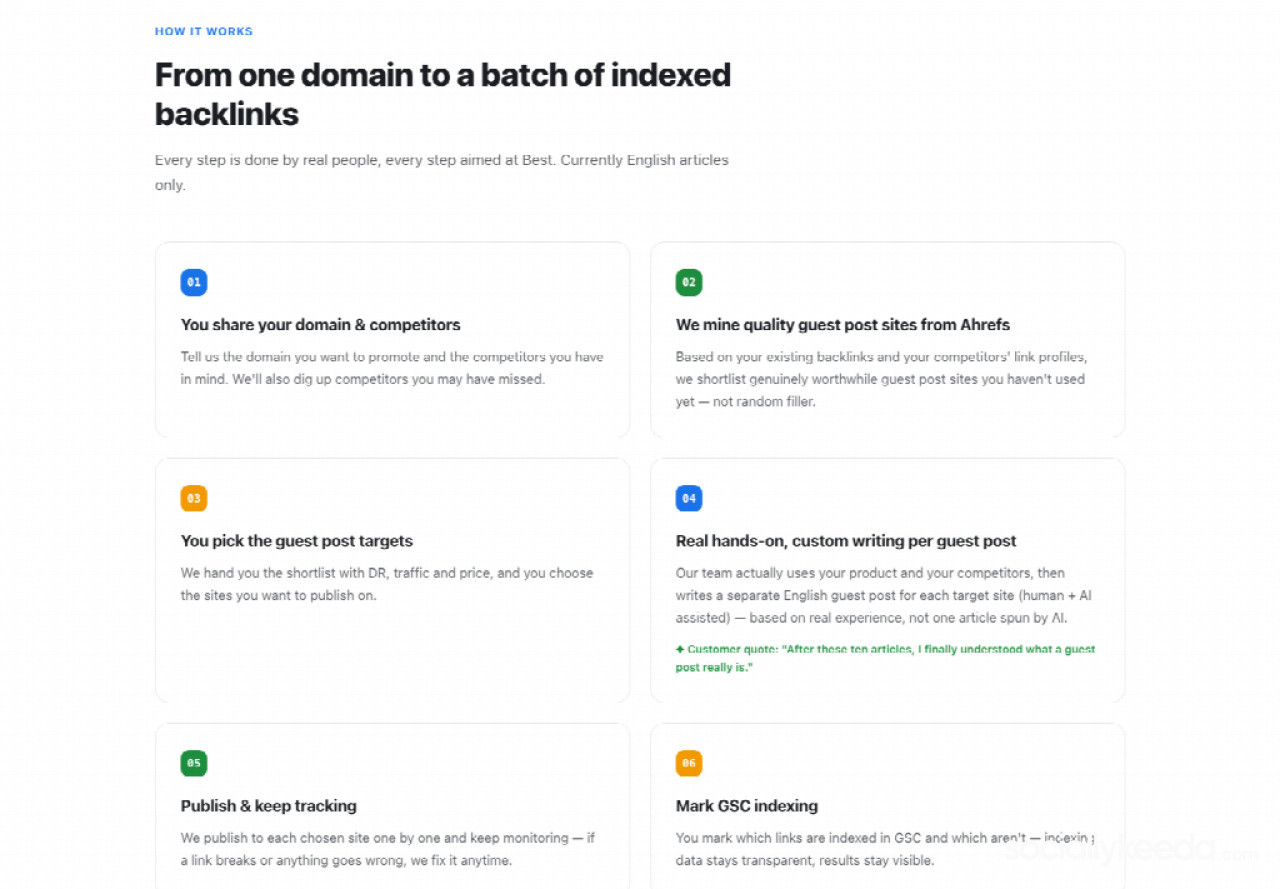
BestLinks AI puts itself on the side that writes. A marketplace, in the contrast they draw, hands you the catalog and leaves the rest. If your desk already has writers and a person who will check every live URL, the catalog can be the cheaper shape. If the desk is the same three people who also cut recaps, the catalog's low sticker can hide a week of rework. The waste isn't the subscription. The waste is the queue of drafts that never leave the building.
Read also: How Do Flats for Sale in South Bangalore Deliver the Perfect Balance of Comfort and Connectivity?
What You Still Do On A Self Serve Marketplace
Read the self-serve side as a job description, not as an insult. Someone sets the filters. Someone digs through a large pool of sites. Someone writes the article, or spins one draft across many URLs. Someone chases the publisher, checks whether the page went live, and fixes what broke. Some of the articles on those marketplaces come from contributors the buyer didn't vet. None of that's imaginary. It's the work that remains after the login screen.

| Job | Marketplace list | Managed desk |
| Finding sites | You filter a large catalog yourself | Shortlist from your links and from competitor profiles |
| Writing | You write, or one draft gets spun | A separate draft after the product is used |
| After the URL is live | You chase publishing and repairs | They publish one by one and stay on fixes |
| Who picks | You, inside your own filters | You, from a shorter sheet with rating, traffic. Price |
| Where the fee sits | Often a service fee equal to the placement | Half the placement, floor 15 dollars, cap 150 |
The last row is the one that changes the invoice, and it shouldn't be skimmed. A fee equal to the placement means a 40 dollar article can cost another 40 dollars before anyone writes a word. Half of that placement is 20 dollars under the rule this operator prints. The table doesn't say the managed side is always the smaller bill. A 20 dollar placement is pulled up to the 15 dollar minimum, which is more than a raw half. A buyer who only looks at the word "half" will misread the floor.
Filters Leave The Writing On Your Desk
Filters are stellar at removing junk and awful at finishing a paragraph. You can demand a traffic band and a rating floor and still be staring at a blank page that has to mention the real product. On a trending desk, that page competes with the day's stories. The draft gets a rushed pass, the product shows up as a sentence near the end. The publisher either rejects it or runs a piece you wouldn't put your name on. That rejection is a normal cost of the self-serve shape. It shows up when the same people who pick the sites also have to become the writers by night.
Chasing The Live URL Stays With You
Even a clean draft can fail after you send it. The page goes up without the link, the link points at a dead path, or the piece never leaves the publisher's queue. On the marketplace side, that chase is yours. You compare the live page with what you sent, and you write again if the version that ran is wrong. The managed offer says that follow-up sits with the crew, including repairs when a link breaks. What they write for each site is a Guest Post tied to that publisher, not a single draft with the domain swapped. A beta note they published, translated from the original Chinese, puts the same thought in a customer's mouth: after ten separate articles, the work finally looked like a real placement than a slogan. Treat that line as one person's account, not as a score.
Read also: Semiconductor Boom Is Getting Bigger Than AI
What The Managed Fee Is Buying
The fee is paying for three kinds of time: a person using your product and your competitors, a shortlist carried through to a choice you still make. The writing plus the publishing. It isn't paying for a secret discount on the publisher's own rate. If the placement is already expensive, half of a large number is still a large number until the cap cuts it. The cap is the part a finance lead should circle. Past a 300 dollar placement, half would exceed 150 dollars, and the published rule stops at 150. The 400 dollar example on the page is the clean illustration: half would be 200, the invoice for the service fee is 150.
| Placement | Half | Fee charged |
| 20 dollars | 10 dollars | 15 dollar minimum |
| 40 dollars | 20 dollars | 20 dollars |
| 400 dollars | 200 dollars | 150 dollar cap |
Use the middle row when you want a number you can say out loud. A 40 dollar placement plus a 20 dollar fee is 60 dollars before any other vendor cost you already pay. The industry norm they cite is a 100 percent service fee, which on that same 40 dollar placement is another 40 dollars, 80 dollars in total. The gap is 20 dollars on this example, not a blank check, and it only matters if the desk would otherwise have spent those hours writing and chasing.
Half The Placement With A Floor And Cap
The floor protects the operator on cheap placements and punishes a buyer who thought "half" meant "almost nothing." Fifteen dollars on a 20 dollar placement is 75 percent, not 50. The cap protects the buyer on expensive placements and stops the fee from scaling forever. Between those two posts, the 50 percent line is literal. BestLinks AI prints that structure in one place so a desk can check it against a real publisher price from the shortlist, than against a rounded slogan. If the shortlist price isn't one of the three examples, do the multiplication yourself and then apply the floor and the cap. Don't assume a fourth example that the page never gave.
Where A Fifty Article Batch Changes The Ask
One more number is published. It isn't a rate. If you buy 50 or more articles at once, they say the terms can be better and they ask you to talk to them. They don't print the discount. A desk that puts "50 at 30 percent" into a forecast is inventing a fee. The honest line in the buying note is narrower: a large batch is a conversation, not a coupon code. Until that conversation happens, budget with the public rule, half, floor 15, cap 150, on each placement you picked.
Read also: Why Outdoor Renovations Need a Waste Management Plan
A large batch also changes the failure mode. Fifty sites chosen in a hurry will include publishers that peek fine on traffic and wrong next to the section. The shortlist still has to be picked by a person who can reject a row. The fee math doesn't do that rejection for you. If nobody on the desk will spend the time to throw out a poor fit, the batch discount, whatever it turns out to be, won't repair the set.
A Realistic Limit On The Fee And The Result
The service fee doesn't buy a ranking. A lower percentage doesn't repair a publisher that was wrong for the section. Charts from sites the operator already runs are a reference, not a promise for yours. Early access also means only a limited number of clients are taken on, so a clean invoice doesn't open a slot by itself. If the placement price is already past the budget, the cap won't make that site cheap.
The Invoice Split That Should Culminate The Argument
Pay the placement to the publisher's side of the market. Pay the service fee only if your desk doesn't have the hours to filter, write, and chase. BestLinks AI is the managed side of that split: half the placement, never below 15 dollars, never above 150, with you still choosing the sites. A marketplace remains the better shape when the writing already lives in-house and the only missing object is a catalog.
If you can't name a real placement price from a shortlist, you can't yet know which row of the fee table you're on. Get that price, apply the floor and the cap, and then decide. A debate about "managed" versus "list" without the arithmetic is how a trending desk wastes a budget meeting and still has no URL.








Comments
No comments yet — be the first to share your thoughts.