

Project management is changing quietly, but deeply. Many people still think AI in projects means machines taking over jobs. In reality, it’s doing something else entirely. It’s reshaping how project managers plan, think, decide, and lead—often without replacing the human role at all.
That shift is already visible. According to the Project Management Institute (PMI), global demand for project professionals is expected to reach 25 million new roles by 2030. At the same time, AI adoption in projects has grown from 36% in 2023 to 70% in 2025, showing that AI is now part of daily work, not a future experiment.
What Does “AI in Project Management” Actually Mean?
AI in project management does not mean a robot running your project. It means software helping with parts of the work that drain time and focus, things like scheduling, note-taking, risk scanning, and status updates.
Most AI tools today act like smart assistants. They listen to meetings, summarize long email threads, flag possible risks, and help managers see patterns faster. According to the AMD Productivity Study, project managers using AI tools save more than 16 hours per week on routine tasks like emails, planning, and reporting.
AI Is Changing the Work, Not the Role
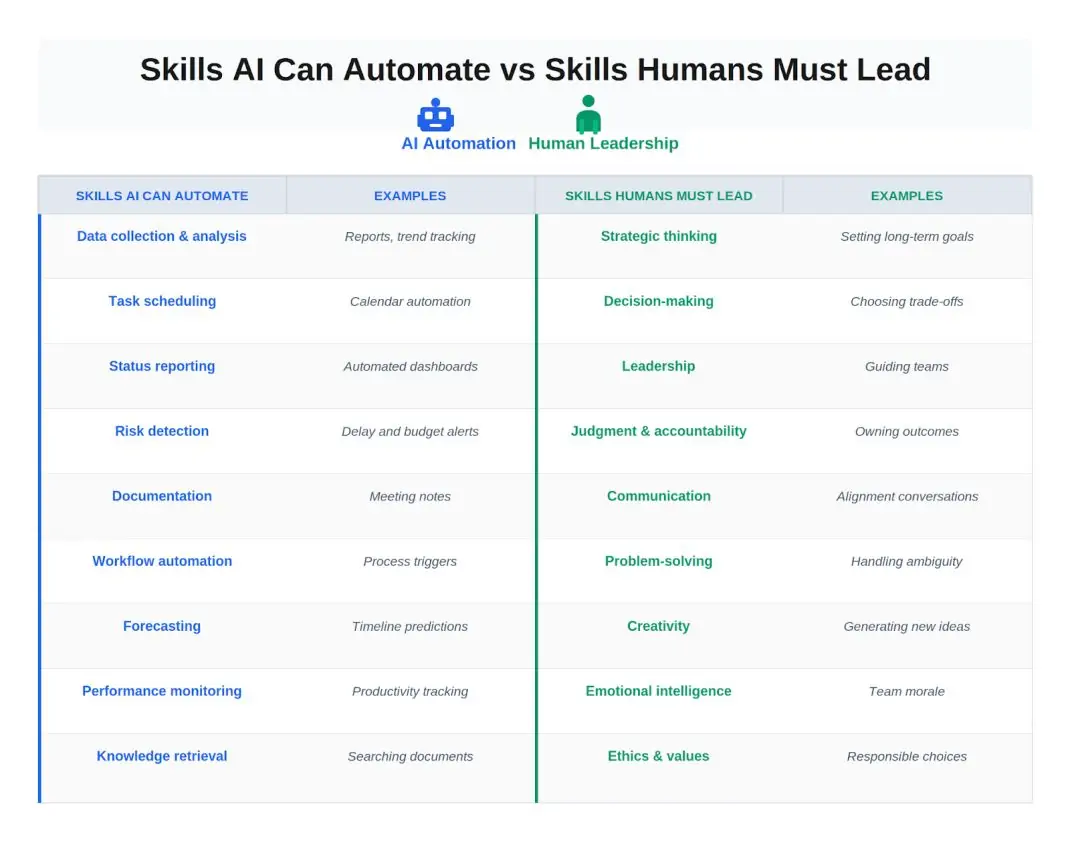
One of the biggest misunderstandings is that AI replaces project managers. Evidence shows the opposite. As AI takes over routine tasks, project managers spend more time on decisions, people, and strategy.
For example:
-
Meeting notes that once took hours are now ready in minutes.
-
Risk registers can be drafted automatically using past project data.
-
Project updates move from weekly reports to real-time dashboards.
According to Gartner, by 2030, nearly 80% of routine project tasks could be automated, yet organizations are increasing investment in project management functions by over 30% (Gartner, 2024). This tells us something important: companies don’t want fewer project managers; they want better ones.
Where AI Helps the Most in Daily Project Work
1. Meetings and Documentation
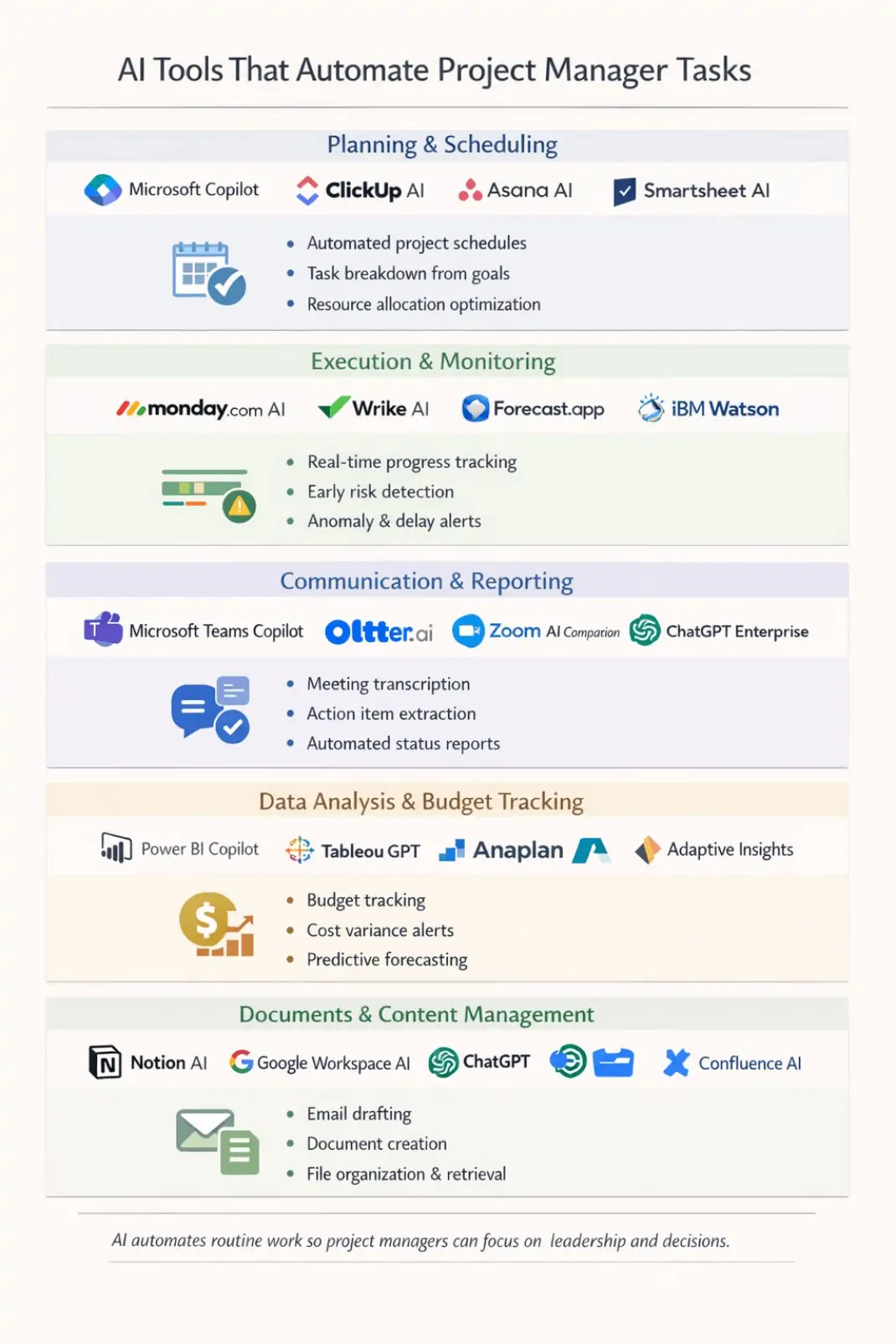
AI tools now record meetings, identify decisions, and pull out action items automatically. This reduces manual effort by up to 87%, according to productivity studies referenced in your material.
2. Emails and Status Updates
Long email chains are hard to track. AI can scan weeks of messages and produce a clear summary in seconds. This cuts response time to leadership from hours to minutes.
3. Risk Identification
Instead of building risk logs from scratch, AI can review project scope, timelines, and past data to surface dozens of potential risks early. This reduces blind spots, though the quality depends heavily on the inputs provided.
How to Prepare Without Overcomplicating Things
You don’t need to master complex algorithms. Start small:
-
Learn how AI tools fit into your current workflow
-
Understand basic AI concepts at a high level
-
Use AI to reduce admin work, then reinvest time in leadership
-
Strengthen decision-making and stakeholder skills
Future-Proof your career with a PMP Course, Certifications, and hands-on exposure help, but real growth comes from using AI thoughtfully, not blindly.
Final Thoughts
AI is not ending project management, it’s pushing it forward. Routine work is shrinking. Human judgment, trust-building, and ethical leadership are growing.
The project managers who succeed will be those who let AI handle the repetitive work while they focus on what machines can’t: people, decisions, and direction. In the coming years, that difference will define careers.